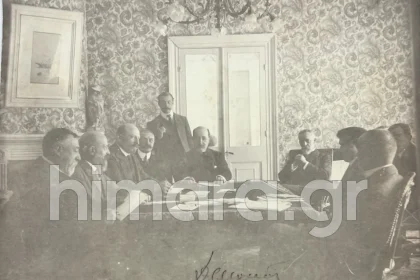

THE Dimitrios N. Doulis(1865-1928), he was a military man from Nivitsa of Himarra and one of the key officials of the provisional government of Northern Epirus (1914).
Γεννήθηκε το 1865 ήταν γιος του Νικολάου Δούλη και δισέγγονος του αγωνιστή της Επανάστασης του 1821, καπετάν Κίτσου Δούλη. Έμαθε τα πρώτα γράμματα στα Ιωάννινα και κατόπιν φοίτησε στο Γυμνάσιο Κέρκυρας. Κατατάχτηκε στο στράτευμα στις 22 Ιουλίου 1883 ως εθελοντής, με τον βαθμό του δεκανέα, ως τελειόφοιτος Γυμνασίου.
On August 20, 1888, he graduated from the NCO Military School with the rank of second lieutenant of infantry. On April 19, 1896, he was promoted to lieutenant. In 1897 he took part in the unfortunate Greek-Turkish war, as an adjutant of the 10uInfantry Regiment and participated in operations in the Artas area. He was promoted to captain second class on 31 December 1904, to captain first class on 18 January 1907 and to major on 18 September 1912, always serving in combat units of the Infantry (10the, 7theand 15theInfantry Regiments, 2theOrder of Belts).
In the Balkan WarsAlready a major, he participated in the Balkan Wars (1912-1913) as abbot of the 3uBattalion of the 15thuInfantry Regiment, in the following battles: Gribovo, Nikopolis, Varlaam, Bouratsa, Pesto, Koulias Ali Pasha, Byzanio and the final attack against the Ioannina.
With the occupation of Argyrokastro, on March 3, 1913, he was appointed first guard of the city until the departure of Syntagma, on March 21, 1913, for Kleisoura.
At the beginning of June 1913, on the 15theAn infantry regiment was advanced to the Macedonian front. In the battle of Nevrokopi, July 5, 1913, he managed with his battalion to attack the enemy first, despite the fact that it was the extreme right flank, eventually forcing him to flee towards Nevrokopi.The commander of the division, Lieutenant General Napoleon Sotilis, praised the action of 3 u douli battalion, saying that "with such an army, we are going to the City".
Στη μάχη του Πρέντελ-Χαν-Καπατνίκ, 17 Ιουλίου 1913, με 200 μόνον άντρες που είχαν εναπομείνει από ολόκληρο το Σύνταγμα –οι υπόλοιποι είχαν φονευθεί, τραυματισθεί ή εξαφανισθεί– κατόρθωσε, μετά τη δύση του ηλίου, να γίνει κύριος της εχθρικής θέσεως, κάτι που καθ’ όλη τη διάρκεια της ημέρας δεν είχε κατορθωθεί. Στην τελική, διά της λόγχης, επίθεση φονεύθηκαν 10 άντρες και τραυματίστηκαν 17, μεταξύ των οποίων και ο ίδιος ο Δούλης, στο στήθος. Παρά τον τραυματισμό του, στη διάρκεια της αναγνώρισης των εχθρικών θέσεων, ο Δούλης δεν αποσύρθηκε από τη μάχη, παρά μόνο όταν έφτασαν ενισχύσεις και εξασφαλίστηκε η κατοχή της εχθρικής θέσεως. Την επομένη, 18 Ιουλίου 1913, έγινε ανακωχή.
Military Leader of the Northern Continental Struggle
On 26 September 1913 he was promoted to lieutenant colonel and on 14 October 1913 he received the 26theA regiment based in Argyrokastro, something he requested, as at that time the fate of Northern Epirus was being decided and he considered it his honor and his first duty to offer his forces and contribute to the region remaining Greek.
Μέχρι τις αρχές Ιανουαρίου 1914 το Βορειοηπειρωτικό ζήτημα είχε προσελκύσει το ενδιαφέρον μεγάλου αριθμού αξιωματικών, οι οποίοι είχαν δηλώσει και εγγράφως ότι θα μείνουν στον αγώνα της Βορείου Ηπείρου, τον οποίο μέχρι τότε ευνοούσε και η Ελληνική Κυβέρνηση. Δυστυχώς, όμως, μετά τις αρχές Ιανουαρίου 1914, όταν η κυβέρνηση Ελ. Βενιζέλου άλλαξε πολιτική, απειλώντας ότι δεν θα επιτρέψει να γίνει αγώνας για την παραμονή της Βορείου Ηπείρου στην Ελλάδα, όλες σχεδόν οι έγγραφες και προφορικές δηλώσεις των αξιωματικών λησμονήθηκαν. Τότε οι Βορειοηπειρώτες επαναστάτησαν, αρνούμενοι να υπαχθούν στο κατασκευαζόμενο αλβανικό κρατικό μόρφωμα.
Dimitrios Doulis led this struggle militarily, immediately after the creation of the Government of Autonomous Epirus, as this was his dream to offer himself to the freedom of his homeland, continuing the heroic history of his ancestors.
He gave his all in the struggle for the Autonomous Region of Northern Epirus, from February 17, 1914 to the end of October 1914. The results of the struggle are worthy of admiration because they were achieved from scratch and despite the abandonment of those in charge.
Dimitrios Doulis was Minister of Military Affairs of the Government of Autonomous Epirus and commander of its Army from Himara to Korçë.
The conversation that took place between Dimitrios Doulis and the Messolongite lieutenant general Anastasios Papoulas, commander of the 5th Army Corps of Epirus, during the 19th century, has remained historic.or and 20or February 1914.
Major General Papoulas informs Doulis that if the Greek Army in Northern Epirus does not refrain from hostilities, he will be considered a deserter. The major general immediately received Doulis' response that he had the obligation, as a native and a descendant of Northern Epirus, to fight for his slaughtered brothers, condemned to a yoke more tyrannical than the Turkish one, and thus, he found himself in the inescapable need to deviate from the orders of the Army and the King.
Ο Δούλης συγκρότησε, οργάνωσε και διοίκησε το στρατό της Βορείου Ηπείρου, διηύθυνε με επιτυχία τις επιχειρήσεις και κατατρόπωσε τα τουρκαλβανικά στίφη που διοικούσαν Τούρκοι και Ολλανδοί αξιωματικοί. Με αυτόν τον τρόπο ανάγκασε τις μεγάλες δυνάμεις να προσέλθουν σε διαπραγματεύσεις που κατέληξαν στην υπογραφή του Πρωτοκόλλου της Κέρκυρας, στις 17 Μαΐου 1914, με το οποίο παραχωρήθηκε καθεστώς Αυτονομίας στις περιφέρειες Αργυροκάστρου και Κορυτσάς. Ως αρχηγός του Στρατού της Αυτονόμου Βορείου Ηπείρου παρέδωσε την Βόρειο Ήπειρο ακέραια και αβλαβή και τους κατοίκους της σώους στον Ελληνικό Στρατό την 14η Οκτωβρίου 1914.
Member of Parliament for Gjirokaster
On the 2nda In May 1915 he was promoted, by election, to colonel, in command of the 10th Division in Veria. He was demobilized, at his own request, on May 6, 1915.
In the elections of May 31, 1915, he was elected first deputy of the Prefecture of Argyrokastro and participated in the 6th term of the Hellenic Parliament, elected member of the Committee on the Military.
His younger brother, george N. Doulis, Was a military doctor and retired in 1931 with the rank of senior general physician.
The son of Kostakis D. Doulis, took part in the asia Minor Campaign, immediately after graduating from the military school, With The rank of second lieutenant And died at a young age in Alexandria, in 1924.
The end of his life and the posthumous honors
Ο Δημήτριος Δούλης πέθανε από ανακοπή της καρδιάς στις 5 Απριλίου 1928 στην Καλλιθέα Αττικής. Κατά την αναγγελία του θανάτου του στη Βουλή των Ελλήνων, όλοι ανεξαιρέτως οι αρχηγοί των πολιτικών κομμάτων, Ιωάννης Μεταξάς, Αλέξανδρος Παπαναστασίου, Ιωάννης Ράλλης, Δημήτριος Μπότσαρης και Μιχαήλ Γούδας, εξήραν τις αρετές, αναγνώρισαν τις προσφερθείσες προς την πατρίδα υπηρεσίες του και τίμησαν τη μνήμη του.
He was buried the next day in the First Cemetery of Athens.
The Municipality of Preveza, to honor Major Dimitrios Doulis, commander of the 3rd Battalion of the 15th Infantry Regiment that liberated the city on October 21, 1912, as well as its first guard, named a city street, in the Tsavalochori district, after him.
The School of Non-Commissioned Officers of the Greek Army, starting from 2009 the institution of adopting the name of a national hero for each class of its graduates, decided that the class of 2009 should bear the name of Dimitrios Doulis.