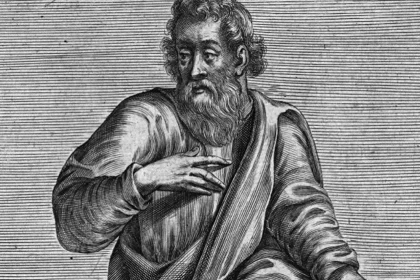

Anaximander, a philosopher from Miletus, lived from 610 to 546 BC and was one of the most important precursors of Greek thought. He belonged to the School of Miletus and was a student of Thales, whom he succeeded as teacher. Scholars and historical sources report that he was the first to record his thoughts in writing, a key step towards the use of logic in the search for truth.
Anaximander addressed fundamental questions about the nature and origin of the world, introducing the idea that nature is governed by laws, just like human societies. According to his theory, the world is based on four basic elements—air, water, earth, and fire—and he believed that the balance between them maintains "cosmic harmony."
In a surviving passage, Anaximander states that the elements "give and take justice" among themselves, an idea that alludes to the cycle of nature, where destruction and creation coexist. This approach was crucial to philosophical thought, as it attempted to explain nature without the need for divine intervention.

Ο Αναξίμανδρος φέρεται να ήταν ο πρώτος Έλληνας που σχεδίασε χάρτη του τότε γνωστού κόσμου, συμβάλλοντας έτσι σημαντικά στη γεωγραφία. Η χαρτογράφηση του περιλάμβανε τις τρεις γνωστές ηπείρους — Ευρώπη, Ασία, Λιβύη (Αφρική) — και οι θάλασσες και τα ποτάμια διαμόρφωναν τα όρια ανάμεσά τους. Αυτή η αναπαράσταση αποτέλεσε τη βάση για μεταγενέστερους γεωγράφους, όπως τον Ηρόδοτο και τον Εκαταίο. Στόχος του Αναξίμανδρου ήταν να καταγράψει τον κόσμο όπως τον γνώριζαν τότε οι Έλληνες, ανοίγοντας τον δρόμο για μελλοντικές εξερευνήσεις.
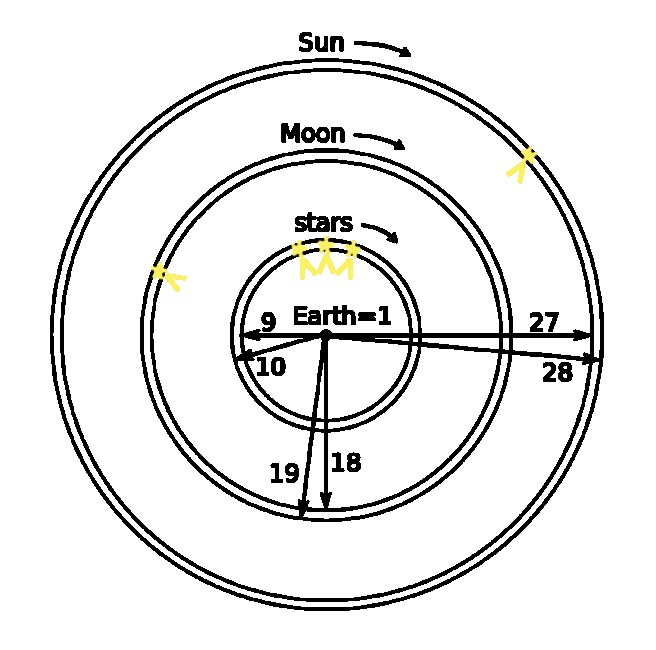
Anaximander Was also a pioneer in astronomy, introducing the idea that the Earth floated freely in space without support. According to his model, the earth Was cylindrical and remained fixed at the center of the universe. This theory is considered one of the first "cosmological Revolutions", since it rejected the need for support for The earth, which led to new searches for the position of celestial bodies.
Επίσης, ο Αναξίμανδρος θεωρούσε ότι τα αστέρια και ο Ήλιος περιστρέφονται γύρω από τη Γη σε διαφορετικές αποστάσεις, εισάγοντας την έννοια της αστρονομικής τροχιάς. Οι παρατηρήσεις του για τις εναλλαγές των εποχών και τα μετεωρολογικά φαινόμενα ήταν αξιοσημείωτες, αποδίδοντας τη βροντή και τον κεραυνό στη σύγκρουση των νεφών, μια άποψη πολύ κοντινή στις σημερινές φυσικές εξηγήσεις.