Estimating the population of ancient Greece is a difficult task, as there are no precise historical records and the picture varies depending on the period of Greek history. Nevertheless, historians and archaeologists have formulated well-founded hypotheses based on archaeological finds, fragmentary census data, and historical testimonies.
Greek history experienced three major periods of prosperity that shaped the foundation of Western civilization: the Archaic (800–500 BC), the Classical (500–323 BC) and the Hellenistic (323–30 BC). Consequently, the time frame of the study of the population extends from the 8th century BC to the end of the 1st century BC, while it should be taken into account that “Greece” was not limited to the Hellenic space, but also included the colonies as well as the Hellenized cities.

Scholarly estimates vary, but a commonly accepted range for the population of ancient Greece at its peak is between 7.5 and 10 million people, making it one of the most densely populated areas of the world at the time. These numbers, of course, remain approximate, as they are affected by the definition of who is considered a "Greek" and whether the estimates include slaves and non-citizens. It is characteristic that in the Archaic Period the population was clearly smaller than in the Hellenistic Period, when the conquests of Alexander the Great led to the spread of Greek populations into areas of Central Asia, North Africa and the Near East.
During the Archaic Period (800–500 BC), Greece had not yet developed into a society with the degree of organization it would later acquire. The population was mainly agricultural, concentrated in small settlements and towns. It is estimated that at the end of this period the total population, including the islands and colonies, reached 1.5 to 3 million.
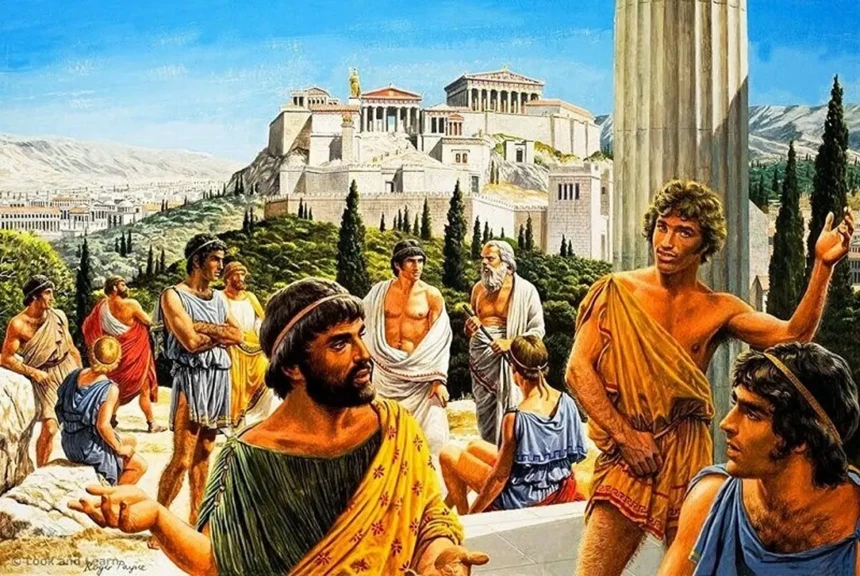
The Classical Period (500–323 BC) is the best-known phase of Greek history, with the rise of powerful city-states such as Athens and Sparta, and developments in culture, politics, trade, and warfare. At its peak in the 5th century BC, Athens probably had a population of 250,000 to 300,000, including citizens, women, children, metochons, and slaves, of whom only 30,000–60,000 were adult male citizens with the right to vote. Sparta, by contrast, had a smaller number of full citizens, about 8,000–10,000, but relied on a much larger population of helots and periokines. In total, the Greek world of this period is estimated to have had 3 to 5 million people.
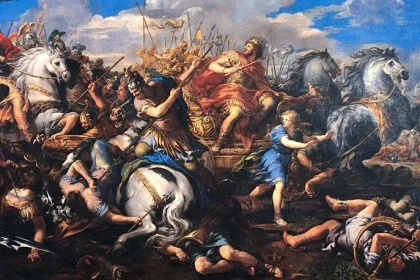
The Hellenistic Period (323–30 BC) marks the enormous expansion of the Greek world following the conquests of Alexander the Great. The spread of Greek culture and the founding of new cities in Egypt, the Near East, and Asia led to an increase in population. Alexandria in Egypt reached a population of about 500,000. Overall, the population of the Hellenistic world probably ranged from 5 to 10 million, with a large part of it outside the Hellenistic area.
Some cities stood out as important centers. Athens, with 200,000–300,000 inhabitants in the 5th century BC, was an intellectual and cultural center, the birthplace of democracy and the philosophers Socrates and Plato, and had a powerful fleet that dominated the Aegean. Sparta, with a total population of 100,000–150,000 (mostly helots), was known for its military character. Corinth, with about 90,000 inhabitants, was a commercial crossroads due to its geographical position. Thebes, with 30,000–50,000 inhabitants, gained great power in the 4th century BC. The colony of Syracuse in Sicily exceeded 100,000 inhabitants, while Argos reached 30,000–40,000. Rhodes, finally, had 50,000–60,000 inhabitants and emerged as a major naval and commercial center in the Hellenistic era.
The social composition of the population was of particular importance. Free citizens, mainly adult men, had political rights, although they constituted a small percentage of the total population. Women and children were numerous members of society but without rights, with the exception of Spartan women who enjoyed greater freedom. Slaves were a basic institution, covering everything from domestic work to specialized professions. In Athens, it is estimated that they amounted to up to a third of the population. The meticos, foreign residents without political rights, contributed significantly to the economy, while in Sparta the helots – who outnumbered Spartan citizens – ensured the maintenance of society.
The population was influenced by various factors. Continuous wars, such as the Peloponnesian War or the conflicts with Persia, caused losses and population movements. Epidemics, such as the plague of Athens in 430 BC, decimated thousands of people, including Pericles. Colonization helped to decongest the Greek area and spread Hellenism throughout the Mediterranean. Finally, the agricultural land and the commercial potential of each region determined the population density.
Overall, the population of ancient Greece varied considerably by period and region. At its peak, during the Classical and Hellenistic periods, the Greek world is estimated to have numbered between 7.5 and 10 million people, a large part of whom lived beyond the narrow boundaries of the Greek realm, in colonies and conquered territories.