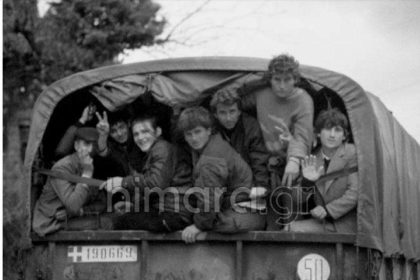

On 22.11.1989, a Shkodra-made bus of the Higher Institute of Agriculture, driven by Ali Omuri, started from Himara towards the city of Saranda around 13:00 and somewhere above Kudesi fell into a ravine. At that time, vehicles were not allowed to pass on the coastal road that today goes to Saranda due to the military base in Palermo, cars made the circle from Kudesi and through detours to reach the other side.
Στο λεωφορείο ήταν τρεις καθηγητές του σχολείου, 14 φοιτητές , καθώς και ένας στρατιώτης. Στις 14:00 στην περιοχή κοντά στο Κούδεσι, 100 μέτρα πριν από μια απότομη στροφή ο οδηγός αντιλήφθηκε βλάβη στα φρένα. Το λεωφορείο άρχισε να επιταχύνει και ο οδηγός φώναξε, λέγοντας: «Μας πήραν στο λαιμό τους» και είπε στους επιβάτες να φυλαχτούν. Στη στροφή επάνω ο οδηγός δεν μπόρεσε να ελέγξει το όχημα, βγήκε από το δρόμο και αφού έκανε μερικές περιστροφές προσγειώθηκε έπεσε σε χαράδρα από ύψος 64 μέτρων. Ο οδηγός και ένας φοιτητής πέθαναν ακαριαία και αρκετοί τραυματίστηκαν σοβαρά.
The expert team confirmed that the bus's fall was the result of technical problems in the braking system.
Initially, the injured were helped by a military unit near the area and immediately transferred to the Himara hospital. The hospital requested specialized medical assistance from surrounding areas.

To help the seriously injured, two helicopters were sent from Tirana. An MJ-6-44 led by commander Vangjel Postoli, pilot Tafil Agaj and engineer Pantelis Tzoumba from the Giorgoutsatis Dropoli, and an MJ-6-50 led by commander Agron Galanxhi, pilot Veledin Resuli and engineer Enver Haka. Among them was the team of doctors from the Tirana hospital consisting of Agim Qarri, Kujtim Hysi, Dionis Makuçi, Zana Floqi and nurse Dhurata Leka.
The helicopters arrived at 16:00 in the city of Himare where the hospital staff was waiting for them. The Tirana medical team concluded that (the injured) should be separated into those who were in very serious condition and medical assistance should be provided to them in Tirana.
Αρχικά οι πιλότοι συζήτησαν μεταξύ τους για τις δυσκολίες της επιστροφής, γιατί σε λίγο σκοτείνιαζε και είχε πυκνή ομίχλη. Ο πρώτος επικεφαλής επικοινώνησε τηλεφωνικά από τις στρατιωτικές μονάδες της Χιμάρας με την Μονάδα Ελέγχου στα Τίρανα και του είπαν πως στο Λογαρά είχε ομίχλη 10/10 και ότι είναι αδύνατον να την περάσει, οπότε και τους προτείνετε να μπουν 5-10 χιλιόμετρα στη θάλασσα. Τελειωτικά η επιλογή της επιστροφής αφέθηκε στην κρίση των πιλότων οι οποίοι μόνοι τους αποφάσισαν να πετάξουν. (ή έτσι τουλάχιστον λέει η επίσημη αναφορά. Άλλοι μάρτυρες λένε ότι από το Αρχηγείο επέμεναν το ελικόπτερο με τους τραυματίες να επιστρέψει επειγόντως στα Τίρανα. Ο πρώτος πιλότος μιλώντας με έναν γέροντα στη Χιμάρα του είπε: “Η κυβέρνηση θα μας σκοτώσει σήμερα.”)
After being informed of the worsening condition of three of the injured, they decide to fly to Tirana.
They mapped out the return route, which would be along the coastline to the island of Sazan and then continue to Tirana. All communications between the pilots and the Air Traffic Control Unit ceased as soon as the helicopters entered Himara, as this area was not covered by the air traffic communication system.
The first helicopter carried the injured Thoma Plasa, Ilirjana Brahimi, Taip Llaçi, Xhelal Ndreu, accompanied by doctors Agim Qarri and Dionis Makoçi.
The second helicopter carried the injured Misto Shumeli, Elida Hyseni, Donika Ferra, Zef Suli, accompanied by doctors Kujtim Hysi, Zana Floqi, Dhurata Leka, as well as doctor Nafail Metollari and nurse Pirro Pulo from Himara.
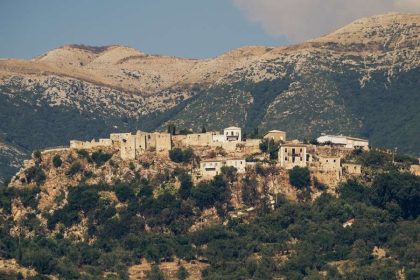
Στις 18:20 σηκώθηκε πρώτα το ελικόπτερο με επικεφαλής τον αξιωματικό Agron Galanxhi παίρνοντας την κατεύθυνση των ακτών. Ύστερα από 3 λεπτά απογειώθηκε το άλλο με επικεφαλής τον Vangjel Postoli το οποίο αρχικά κατευθύνθηκε προς τους Αγίους Σαράντα, αλλά μετά γυρίζει πίσω και κατευθύνεται πάλι προς τη Χιμάρα, πετώντας προς το Βούνο όπου και κατέπεσε στο βουνό πάνω από το χωριό. Όλοι η επιβάτες βρήκαν το θάνατο και το ελικόπτερο καταστράφηκε ολοσχερώς. Οι κάτοικοι του χωριού και η μπριγκάτα της Χιμάρας έσπευσαν και έβγαλαν τους ανθρώπους και έψαχναν για επιζώντες. Η μακάβρια εικόνα από τα διαμελισμένα μέλη ήταν αυτή που θα έμενε χαραγμένη για πάντα στις μνήμες όσων βρέθηκαν εκεί.
Around 19:00, a loud bang is heard from a military unit near Logara on the mountainside, accompanied by a large fire. Searches conducted after 14 hours found the wreckage of the second helicopter and all those inside it dead.
The total death toll from the conflict was 21. The charred bodies were transferred to the Palasa military hospital with the help of the staff of the Himara hospital, people who knew the victims personally and forensic experts. All the victims were fully identified and their personal belongings were handed over to their families.
For the plane crash, the investigation proved that the collision was due to extreme weather conditions and there were no technical problems. According to the experts' report, the sudden deterioration of weather conditions, strong wind, lightning and reduced visibility due to the dense fog that prevailed, are the main reasons that caused the helicopters to deviate from their route and crash in Logaras and Vounos respectively.
Both pilots had tried to stay along the coast to use the lights on the right as a guide, but the rapidly deteriorating weather and strong winds, reaching 9 Beaufort, caused them to go off course. The helicopters' collision in the mountains occurred almost simultaneously but at different points.
A momentary cyclone, as recorded at a speed of 165 -180 km per hour, seems to have swept them away almost at the same time with the well-known tragic results.
The paraphilia and rumors of the time spoke of an attempted escape by the military and doctors, something that was never proven.
The Military Aviation team and the medical team have received medals for Fallen in the Line of Duty and the title of National Martyr.

The fatal coincidences of the accident
It is impossible to escape destiny
The first fatal coincidence that day was that of the pilot. The second pilot, veledin Resuli From vlora, was Off duty, but was still at the base. when His friend spartak mitka Informed Him that they were leaving for himara, He begged him to take his place. “Oh, Let me take your place, kill me, do whatever you want to me, i have you as a brother, i will never forget it in my whole Life!” With these words he convinced him to switch places, and the other man was to remember this for the rest of his life.
The second fatal coincidence was that of engineer Zalo Hysi. That day he was on duty at the Farke helicopter unit, when Pantelis Tzoumbas came and said to him: “I was looking for you. I have a problem, the inspection is over at 644, if you want the service, do it tomorrow or the day after. I do it today.” Thus, Hysi's helicopter, 652, was replaced by Pantelis Tzoumbas' helicopter 644.
The other fatal coincidence was that from July 1, 1979 to September 1, 2006, the doctors who were called to such incidents were from the Military Hospital, because the landing strip was also there. On that day, the doctors from the military hospital had finished school early and were therefore forced to call in doctors from the civilian hospital.
And here's another incredible coincidence. One of the doctors on duty who was called to go was Kujtim Hysi, the brother of the engineer who had just switched positions with Juba. Excited to see his brother, he told the rest of the team: "My brother is on duty, we'll go in his own helicopter."
And while the pilots were on standby and waiting for the doctors who had been late, Agron Galanxhi, speaking on the radio, said to the co-pilot: “The doctors are not coming. Let's go and leave.” As soon as they took off, they saw the ambulance with the doctors arrive at the door of the unit and they went down again to pick them up.
“We came, we came, don’t leave, we are excited to go to Vlora, but we want to go with Zalo’s helicopter,” said his brother Kujtim Hysi. The doctor was clouded when he learned that shifts had changed just a few hours earlier and reluctantly went on the trip, which was to be his last, as well as that of the team leader, Agron Galanxhi, who would retire in 4-5 months.

Η άλλη μοιραία σύμπτωση έρχεται από την ιστορία της Ζάνα Floqi, της γιατρού υπηρεσίας στο νοσοκομείο n.2 των Τιράνων, που για ελάχιστα λεπτά της έπεσε εκείνης ο κλήρος για το μοιραίο ταξίδι. Η Ζάνα είχε μια μεγάλη φοβία με τα ελικόπτερα και γι’ αυτό το λόγω δεν είχε ταξιδέψει στο παρελθόν. Δυο γιατροί και μια αναισθησιολόγος όμως εκείνη τη μέρα έφυγαν νωρίτερα για το σπίτι επειδή ακυρώθηκε ένα χειρουργείο. Η συνάδελφός της εξιστορεί πως η φίλη της τη ξεπροβόδησε μέχρι έξω από το νοσοκομείο, αγκαλιάζοντας την και λέγοντας της, το ποσό τυχερή είναι που τέλειωσε νωρίς. Πριν προλάβουν να φτάσουν στα σπίτια τους καλά καλά, τους ξανακάλεσαν αμέσως πίσω για το ατύχημα στη Χιμάρα, για να έφευγαν με τα ελικόπτερα. Τρέξανε να προλάβουν αλλά η εντολή ήταν τόσο κοφτή, ώστε δεν άφησαν κανένα χρόνο αναμονής. Αν η εντολή δεν ήταν τέτοια, και δε είχε συμπέσει επίσης με το γεγονός ότι η ώρα του ατυχήματος ήταν τέτοια, γύρο στις 15:40, ώρα που όλοι σχεδόν οι γιατροί είχαν φύγει, η Zana Floqi δε θα είχε πάει με την μοιραία πτήση. Γιατί κανένας γιατρός δεν είχε συμβεί ποτέ να αφήσει την υπηρεσία του νοσοκομείου και τη μονάδα του, για άλλο περιστατικό.
Και τη μπορούμε να πούμε για την περίπτωση του Nafail Metollari, του γιατρού του Παλέρμου στη Χιμάρα, που πήρε το «εισιτήριο» του θανάτου μόλις λίγα δευτερόλεπτα πριν την απογείωση. Αφού ο Βασίλης Ρόντος προσπάθησε να μπει στο ελικόπτερο με αναμμένο τσιγάρο και ο πιλότος αντέδρασε, ο Metollari, βρήκε την ευκαιρία και παρακάλεσε τον Βασίλη που ήταν ο επικεφαλής από το νοσοκομείο της Χιμάρας, να πάει στη θέση του, και με την ευκαιρία να δει την αρραβωνιαστικιά του. Και έτσι έγινε, άλλαξαν θέσεις τελευταία στιγμή και το τσιγάρο «έσωσε» τελικά τη ζωή του Βασίλη Ρόντου.
“Everything, small or great, performs the work for which it was intended,” said Hippocrates. And everything that day, small or great, seemed to change from one moment to the next until the final puzzle of fate was created that would cut the thread of life for 23 people in one fell swoop.