
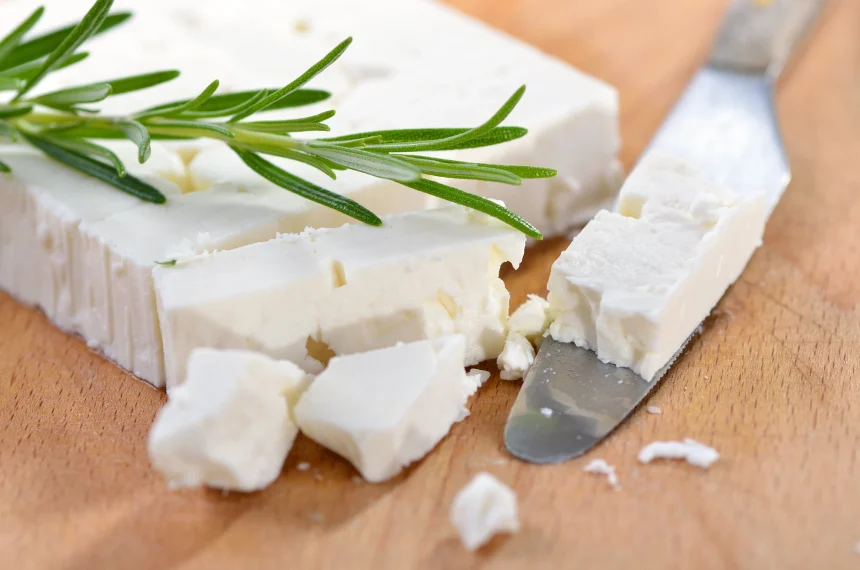
Feta, the white and soft cheese that has conquered the world, is considered the "king" of greek cheeses. Its origins can be traced back to antiquity and is even recorded for The first Time in homer's "Odyssey", making it the oldest cheese mentioned in written sources.
According to the epic, when Odysseus and his men entered the cave of the Cyclops Polyphemus, they immediately noticed the strong smell and the presence of a white, rich cheese made from goat's and sheep's milk in brine. Homer describes how Polyphemus collected the milk, allowed it to curdle, and stored it in woven baskets, while keeping the rest for consumption.

Legend has it that the Cyclops accidentally discovered the cheese we now call feta. While transporting the fresh milk of his animals in leather bags made from animal stomachs, he noticed one day that the milk had curdled and turned into a solid form, delicious and – most importantly – preserveable.
Given that the Odyssey was written in the 8th century BC, it is clear that feta cheese is undoubtedly of Greek origin. The ancient Greeks called the cheese made from curdled milk "tyri".
The word "feta" however first appears in Byzantine times. At that time the cheese was called "prosfatos", meaning fresh, and was mainly associated with Crete. In 1494, the Italian traveler Pietro Cazzola, who visited Heraklion, Crete, accurately describes the production and preservation of the cheese in brine.
The use of the term "feta" became more widespread in the 17th century, probably because the cheese was cut into thin slices either for storage or for serving. The term became established in the 19th century and has since become synonymous with this particular spicy cheese, which has been prepared in much the same way for centuries in Greece.
Feta cheese gained European recognition as a Protected Designation of Origin (PDO) after a long legal battle. Greece applied to the European Union in 1994 to register feta as an exclusively Greek product. Other countries, such as Germany, France, Denmark and the United Kingdom, argued that the term “feta” was simply of Italian origin (from the word “fetta” meaning “slice”) and that the cheese could be produced anywhere.
However, in 2005 Greece finally won the battle and feta was officially recognized as a Greek PDO product. Today, not only is it considered the ultimate Greek cheese, but we also know that its history extends back to the depths of antiquity, making it an integral part of Greek cultural and gastronomic heritage.