
In 1944, the albanian communists, led By the notorious enver hoxha, came To Power. After "driving out the german occupiers," they immediately began harsh economic measures throughout Albania, and especially in Himare.
The first measures were the confiscation of all the merchants' shops, a harsh tax system for all the villagers and extraordinary astronomical taxes on the richest. They carried out a great deal of propaganda in the media and in compulsory rallies of the people against the capitalist system and against the Greek state which was "monarcho-fascist".
The greatest propaganda was being carried out for the elections on December 2, which would elect the Albanian National Assembly, which would also "democratically" determine the Hoxha regime.
The people of Himara started their reaction to these elections early on. They saw that this system would take away all the rights of the Greeks of Albania and especially in Himara. On the other hand, the people of Himara were aware of the cruelty of this system in Russia.
They knew how Stalin tried his opponents in 1937 and they also knew how "democratically" and "voluntarily" the Russian communists set up the collective farms and what their performance was. I say this so that the people of Himara do not listen to the Albanian propaganda that supposedly the reaction of Himara to the 1945 elections was simply anti-communist in nature.
No, gentlemen, this greatness of the elections on December 2, 1945 had two aspects: the crown was the Hellenism of Himara and the letters were anti-communism.

There were three factors that made the people of Chimmari not go to the polls at all on December 2: a) the Greek soul and patriotism of the people of Chimmari, b) the bravery of the men who organized this abstention, and c) the importance and help given by those who came from Greece.
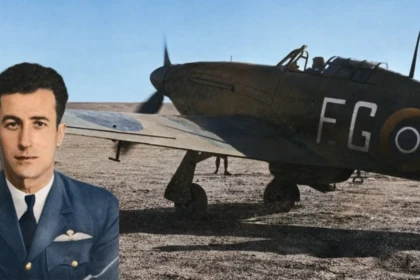
From Greece, Odysseas Rontos, Anastasis Dimalexis and Kostas Veizis secretly arrived by sea in Himara, while Gole Priftis was in Loukouvo and Dimos Todris was in Kiparos.
I met Odysseas Rondo who came to our house late one night and because others were also there I took him and hid him. When the others left the house I took him from the hidden place and brought him to my dad. He slept at my house and in the morning before dawn I took him to Sotiris Mitros' house and then to Pylios Kokavesis' house where he asked for him alone.
This young man, Odysseus (Theo) Rondo, who was locked up in Himara for a few months and crossed the border between good and evil, seriously risking his life, I met him with great desire in Athens after 50 years.
Demos Todris, with all his bravery, was unable to be effective in Kiparos (the people of Kiparos asked him if he was an envoy of the Greek government and because he gave a negative answer, he was not listened to).
In Himare, the initiative to organize the abstention was taken by the brave Andreas Dimas (Ilias) or as he was called Lialias. He was 69 years old, thin and thin, with a cane and a cap and always well dressed.
Uncle Andreas was honest, learned, nervous, never afraid and had great patriotic feelings. His education was from the Greek school in Himara.
Intense verbal propaganda was organized from house to house. Uncle Andreas called his first collaborators one by one and swore an oath to them at his house or at the house of Spyros Kyritsis, which was near the square (in the kambi).
With great secrecy, he sent his collaborators to all the villages, but unfortunately they were unsuccessful. Only in Himara (the town) was this propaganda aimed, and on December 2, around 90% of voters abstained from the polls.
Election Sunday began with the service. All the people went to church. Only the committees opened the ballot boxes.
Ironically, uncle andreas had been appointed Chairman of the committee in the largest center, which was the village of himara (in Those Years, most of the population lived in the villages of Himara).
Each center had two ballot boxes and the ballots were two small rubber balls. The white one was for the ballot box in favor of the Democratic Front candidate, who was the well-known Spyros Kolekkas from Vouno, and the black one was for the opposing ballot box.
The day was quiet without military or police forces. It was a sunny day. After church, people went home. There was no one in the square or in the cafes.
Only in the houses where there had been recent deaths, were many men and women gathered. They were discussing only the Elections. in the House Of savvas rontos, whose son had died that same week, most of the men of himara sat until Evening.
I was 13 years old and together with my friend Alekos Christos we stayed all day near the outer door of the school and wrote the names of those who went to vote on a list.
In the village of Himare, only 35 people voted. These were families connected to the communist party, those who had partisan children, and a few employees.
At the ballot box in the caves, these few voted late at night so that people wouldn't see them (because they were ashamed). There were examples like Miltos Beleris who voted so as not to lose his public job, which probably played a big role in the propaganda for abstention throughout his neighborhood.
Around 11 a.m., a plane dropped leaflets calling on the people to abstain from the elections.
At noon, the Albanian general Bendris Spahias came to the camp, dressed in official uniform and did not go to the ballot box at school at all.
Outside the Yossians' shop, about a dozen men and children gathered around him. Among them was Zacho Rapos, who knew Spachias from his years in Italy in Gjirokastra.
Bendris was angry, walking around irritated and holding a proclamation in his hands, he shouted: "These papers are driving you crazy."
Uncle zachos Cunningly told him: "We don't Know this, so give it to me so we can read it." the General Opened his hand to give it, but regretted it.
Then uncle Zachos told him that the people of Himara are Greeks and have nothing to do with these elections. Spachias got in the car and left, saying that Himara is the worst disease (verema) of Albania.
The late Themistocles (Mideos) Zotos wrote a poem about this meeting where, among other things, he says:
Bentri Spachias comes out and Zacharias tells him to get out of here quickly because it's Greek.
On the evening of that day, the candidate for Himara, Spyros Kolekkas, arrived and went to the school in Kalpi, Himara. About ten meters from the outer door of the school, he was met by a woman (Anna Katsielanou), who was distantly related to him.
She told him with some irony: “come out in person.” Kolekkas pushed her and told her that I will not come out of you.
At the Himara polling station, the committee members sometimes told the chairman (Uncle Andreas) that we (the committee) would never vote. He would reply, "We will vote in the end."
Late at night, Uncle Andreas came out to the door and smoked. After seeing me, he said to me: "You stupid old man, you've been sitting around all day. You had no one to write to."
When it was time to close the polls, Uncle Andreas told the committee members: "We're counting the votes without voting ourselves," and that's how it was done, but the counting only lasted a few minutes because they had nothing to count.
Thus ended this historic day for the heroic Himara.
The day after the elections, reprisals began in Himare. Large military and police forces were attacked, which were moving around and conducting exercises in a showy manner, in order to create a situation of fear and terror.
It was as the folk poet Mistos Zotos said:
Minister Kolekkas
he swore an oath on the cross
"it will produce black water"
They held rallies with the people, threatened the people of Chimaera, spoke against Greece and particularly emphasized the great power of Albania, Yugoslavia and the Soviet Union.
This situation continued for about 2-3 Months. on January 11, 1946, The national assembly was held and they Declared Albania A People's "Democracy". but their actions showed that this regime was not only democratic.
This was the situation until the evening of February 25. I remember that night like it was yesterday and it gives me chills. In all the neighborhoods we could hear the noise of military footsteps and the barking of dogs.
In our neighborhood (in Kastro) they arrested Iraklis Gionis and zachos Lykokas. My Dad was praying by the lit lamp in the House. no one slept that night.
The next day everyone was asking who was imprisoned and they took stock. That night they imprisoned 35 men.
The terrorist demonstrations continued until these innocent people were tried. At a gathering of the people in Kambi one Sunday, one of the local rulers (from Vouno) declared that the state was forced to carry out these actions (imprisonments) because otherwise "the people of Chimaerion would end up playing cards with it (the state)."
The list of those who voted remained in my hands. I was terrified and didn't know what to do with it. But I didn't want to destroy it.
So, without asking anyone, not even my dad, I decided: I copied the list cleanly onto new paper and hid it behind the icon of Jesus Christ of the Episcopate. This church is near my house.
After 21 years in Albania, the communists destroyed the churches. I unexpectedly left Fier where I worked and lived and went to Himare to catch this list before it fell into their hands.
Unfortunately I didn't have time. When I arrived in Episkopi, all the images had been removed. The list was in the hands of the Albanian security forces. I learned about it from these bodies after a while, after they threatened me.
After long and tyrannical interrogations, the day of the trial came. At the end of April 1946, in the shop of the late George Bolanos, the mock trial began.
They condemned the people of Chimarrio for high treason against the state and as agents of Greece. Judges, prosecutors and lawyers, all military, illiterate (shepherds) and without any knowledge of world law and legal practice.

THE uncle Andreas (Dimas) was the first accusedIn this courtroom – a parody, Uncle Andreas raised his patriotic stature even further. He took everything against himself and categorically declared that all the others were innocent and did not do any act or propaganda to the people of Chimarri for abstention.
Probably when the barbaric interrogators were beating them in front of him, Uncle Andreas shouted: "They are not guilty of anything, I did everything, you are only beating me."
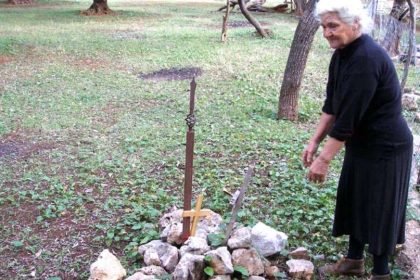
Andreas Dimas was tried to death and on 29-05-1946 he was executed in Platseri, a few meters below the Lamanos bridge. He was shot and covered with stones in a very shallow grave, before he breathed his last.
No trace of his bones was found in the boats his children built in 1990-91, since they had not been covered with soil. The man who gave everything for Himara and Hellenism, unfortunately, was not able to get even two meters of land for his grave.
Many years later, an eyewitness from among his barbaric executioners has somewhere said the last words of this brave man before his execution: "I am a Greek and I die a Greek. Long live Greece."
His daughter Antigone Christou (Dima) says in one of her painful poems:
They took him to the desert.
they spread him alive
they stoned him with stones.
he is buried alive.
covered with stones
a guard was guarding him
the criminal was not in pain
he was stepping on him from above,
he was groaning heavily
he couldn't speak
help he asked for
he was barely breathing.
Second, they presented the Iraklis GionisAnd uncle Hercules was a brave patriot who resisted the investigators and judges.
He may not have agreed with Uncle Andreas on everything, but he did as the honesty and patriotism of every Chimarrian demanded, along with his family and his cause.
I say this, not because the disagreement had any benefit, but so that today's Chimarrans understand that Uncle Iraklis and the other Chimarrans have always put their ideals, their patriotism, their Chimarrans above all else.
I have the floor for these people of Himara today, who, due to petty disagreements and petty conflicts, distance themselves from the struggle, join political factions that deny the rights of Himara and act against Himara.
And Iraklis Gkionis, the Albanian court sentenced him to death. The presidium of the Albanian parliament granted him his life, after the petition made by his family, which was signed by all the people of Chimarria.
Grandpa – Hercules spent his entire life in the brutal prisons of Boureli and died a few years after his release.
Him Dimitris Androutsos they presented him as a third party and sentenced him to life in prison (the prosecutor requested death).
He spent many years in prison and died in Himara, isolated from "society."
The others who were sentenced to life imprisonment or 20 years in prison are:
– The Nikos Katselanos, a tall and very intelligent man. When he was campaigning to his relatives about abstaining from voting, someone told him that we would suffer.
Uncle Nikos replied that they have nothing to do with us if we are united. His relative said: "You will suffer" and he replied: "To the devil's mother I will go for the good of Himara".
He died in prison In boureli and his children went through an entire odyssey to find his bones.
– The late Nikos Koutoulas who refused to speak Albanian in court and asked for a translator.
The court was adjourned and, instead of a translator, they brought him a document certifying that he had once attended an Albanian school.
He replied: "I didn't tell you I don't know Albanian. I told you I want a translator because I will speak my native language."
He died in Himara in 1944, unwavering, even though fate dealt him many other misfortunes.
– The Kitso Kokkas a brave Chimarriot and very fierce in defending justice and the homeland. He had lived in Crete for many years.
– The Pylio Goros he was a serious, taciturn and stoic old man. He was imprisoned along with his son Peter.
He died in prison In boureli and his bones were not Found. his son petros Is the only one who is not alive today of all those arrested in Himare in 1946 for the elections.
The following were sentenced to approximately ten years in prison:
– Zachos Likokas
– Zacho Rapos
– Panos Kokavesis
– Municipality of Dimogianni (Panos)
– Pylio Nerantzis and
– Milio Panos, who was initially sentenced to 30 years and on 24/12/1946 the sentence was reduced to 20 years.
Many absurd accusations were heard in court. For example, Zachos Likokas and Pylios Nerantzis were accused of going to Logaras and committing sabotage by cutting the telephone lines.
These two were elderly and had no means of committing such an act. Uncle Zachos, the Likokas, took an hour to get from his house to the cafe because he was sick.
When he got out of prison, I jokingly said to him once: "How could you, Uncle Zachos, go to Logara and cut the wires?" He replied: "Such a depraved kingdom does not exist anywhere in the world, my child."
The following were tried with lesser sentences and exile: Nikolaos (Kollias) Bourbos, Thanasis (Nasios) Kokavesis, Anastasis (Tsatsis) Gkiokas, Nikos Likokas, Stefos Goros, Pylio Bolanos, Petros Goros, Kitso G. Lazaris, Misto Zotos, Damianos Bolanos, Spyro Christos and others. May the people of Chimarrio forgive me if I have forgotten anyone or made any other mistake.
On the day the court decision was given, they called the people of Himara outside the courtroom. They demanded applause from the people, which is why they had gathered a lot of thugs.
They wanted to hear the people of Himarra say that the court was fair. In such an environment, the voice of a young Amazon from Himarra, Kallithea Pylio Bolanos, was heard, who shouted with great courage, "They are innocent."
Other Chimarriots followed her, shouting the same thing. Thus, the crowd closed in front of this bold and heroic little girl.
Closing these series, i want to say a few words about some Intellectuals from himara, who secretly albanianize today, but do not have the courage to openly defend albanian propaganda and say that all the evils That befell himara from the communist system arose From December 2, 1945.
That is, they advise their compatriots to become rascals and always bow their heads. No, gentlemen, what you are saying is Wrong. The albanians are bothered by our origin, they want to change our ideals.
They behaved the same way in the 50 years with other villages of Himara that voted and with the villages of Avlona (Arta and Svernetsi) or Premet that voted. And there they harshly imprisoned and closed the Greek schools.
On the contrary, if there is today some respect for the people of Chimarria on the Albanian side, this is a continuation of the character of the people of Chimarria, which is incompatible with slavery, it is a consequence of their resistance.
George Zachos