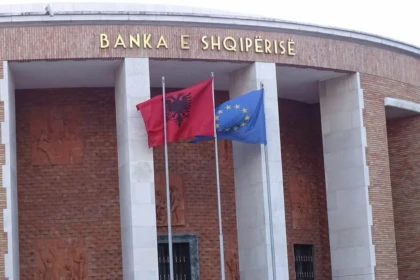

Through two non-papers, the European Commission expresses serious concerns about the demonstrations and coordinated attacks by the government majority against the Special Prosecutor's Office for the Fight against Corruption and Organized Crime (SPAK), following the arrest of the mayor of Tirana, Erion Veliaj, in February 2025. At the same time, the problem of the non-implementation of Constitutional Court decisions and the use of direct negotiations in public procurement is highlighted.
The Commission points out that the independence of the new judicial architecture must be preserved and expresses concern about the interventions of The parliamentary committee "Xhafaj", which oversees anti-corruption issues.
The non-implementation of Constitutional Court decisions by the Albanian parliament is identified as a problem for the rule of law, with the EU emphasizing that this is an issue of critical importance in the progress of negotiations.
The above is highlighted in two unofficial evaluation comments, which were transmitted to the Albanian government in mid-May and early June, in the context of monitoring the key chapters of the accession negotiations, with a main emphasis on the rule of law.
A document states specifically:
“The investigation and arrest of an elected official, confirmed by the special prosecutor’s Office (SPAK) In february 2025, Has provoked unprecedented public reactions from the executive and legislative branches, including efforts to pressure the Judiciary. This is a serious cause for concern.”
The EU also refers to two formal complaints by SPAK to the Ministry Of the interior And The state police, for failure to strengthen security and protect its staff during a protest in front of the sPAK building, Following the arrest of veliai. incidents Of Pressure on judges and prosecutors are also reported.
During the reporting period, six judicial officers (two judges and four prosecutors) were placed under protection, while SPAK launched a criminal investigation for attempting to exert pressure on a judge, in a case involving a member of parliament.
The Commission also assessed the vetting process, the functioning of the courts, and the difficulties arising from the lack of human resources. It also notes that some legislative proposals that attempt to resolve these issues are not fully aligned with European standards.
The draft report, which was leaked to the media, also mentions "weaknesses" in the functioning, methodology, transparency and participation of the parliamentary anti-corruption committee, which is chaired by socialist MP Fatmir Xhafai.
The Parliament of Albania, as the highest legislative body, is criticized for weak oversight of the executive branch, for the failure to implement decisions of the Constitutional Court, as well as for the delay or negligence in the appointments of executives to key institutions.
During the current parliamentary term, the ruling majority refused to implement two Constitutional Court rulings, which called for the case of MP Olta Zatska to be sent to the court for interpretation, following the government's appointment of her husband as a "strategic investor".
According to the EU report:
"Parliament must implement the decisions of the Constitutional Court that still remain unimplemented."
Another area of concern is the public procurement system. the EU Places particular emphasis on cases of direct negotiations by the government, which it considers to be non-transparent procedures.
The amended public procurement bill contains a transitional provision allowing the Council of Ministers to approve direct negotiations for contracts in “sectors of strategic interest” for a period of three years. The EU expresses concerns about the compatibility of this provision with the European acquis.
So far, neither the government nor the governing majority have commented on the eU's observations and recommendations On progress in the key negotiating areas. the commission's Official report is expected To be made public in early July.
The Minister of State for Relations with Parliament, Tauland Bala, and the Vice-President of the European Affairs Committee, Ethilda Gionai, stated that they are not aware of the existence of such a report, as – as they stated – it is a draft sent to the Ministry of Justice, which collects the comments of the competent institutions and transmits them to the EU, before the final official report on the main chapters is formulated and made public.