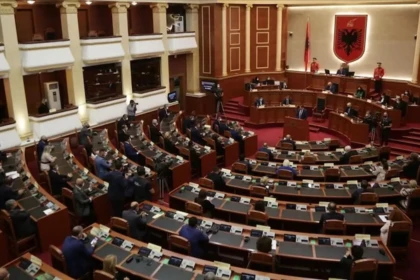

It was 3:40 in the afternoon on October 6, 2025. A judge at the Court of Appeals in the Albanian capital, Tirana, was reading the verdict. Seconds later, three gunshots echo through the courtroom, hitting the judge in the seat. and causing panic, as bystanders run for their lives. The 62-year-old Astrit Kalaja he would later succumb to his injuries.
The decision Kalaja was reading concerned a property dispute dating back to 1992 — a case that went through Albanian courts for more than three decades without a final resolution.

The man who pulled the trigger was the 30-year-old Elvis ShkambiAccording to police, he opened fire after the court's decision was against his family — a decision he later described as "scandalous" and the result of years of injustice against their family property.
Unprecedented reform
The murder occurred almost ten years after the start of a justice reform program aimed at restoring trust and fighting corruption.
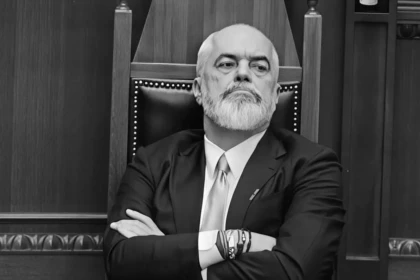
The Prime Minister Edi Rama he had pledged that the “vetting” process introduced by the reform would remove corrupt judges and prosecutors from the judicial system.
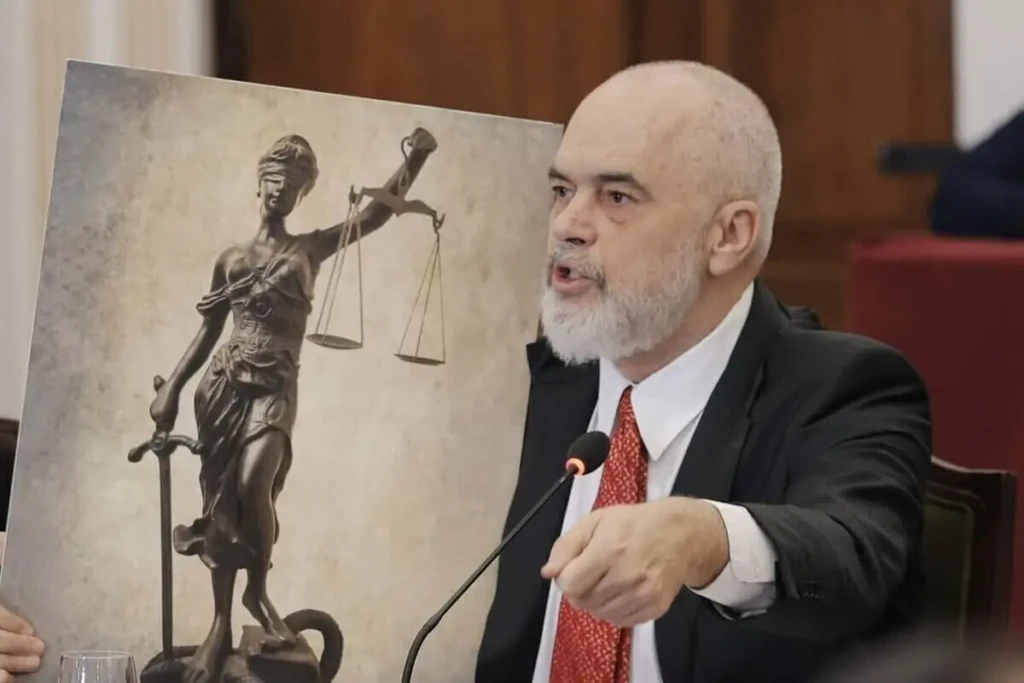
In July 2016, Albania proceeded With the most radical justice reform in its history, when all 140 members Of parliament voted Unanimously in favor of the constitutional amendments that shaped it.
This rare political consensus was warmly welcomed by both the European Union and the United States.
Strict control process
At the heart of the reform was the vetting process, which provided for a thorough check of the assets, integrity and professional conduct of every judge and prosecutor in the country.
"Corrupt judges and prosecutors will be removed from the justice system through the vetting process," edi rama said at The Time.
"It was a reform without precedent on a global level," said the legal scholar from the University of Tirana. Alban Koci"It was designed to serve citizens, protect them from corruption, restore the dignity of judges and regain confidence in justice."
However, the scope and speed of reform soon revealed the limits of a system incapable of absorbing such radical changes.
From catharsis to collapse
The reform fundamentally changed the structure of Albanian justice.
The vetting process removed judges faster than the system could replace them: about 65% of judges and prosecutors were dismissed within the first five years.
As control moved to the upper echelons, the reform paralyzed the country's highest courts, leaving Albania without a Constitutional Court and Supreme Court for almost two years.
At the same time, the new judicial map led to the closure or merger of 20 courts across the country.
The overall result was a system that operated with drastically reduced capacity. According to the Ombudsman’s annual report for 2024, Albania has just 9.8 judges per 100,000 inhabitants — about half the European average.
According to Alban Koci, European standards were applied to a justice system that was unable to support them.
Growing caseload
As the backlog of cases piled up, the consequences of the reform became apparent.
In the Court of Appeals alone, more than 45,800 cases remain pending as of 2017. The court currently operates with approximately 40 judges — just over half of the 78 positions provided for in its organizational chart.
For citizens, this means waiting for years. “The new judicial charter has shifted the burden to the public,” Koci said. “If a case used to take three years to resolve, today the average is 15.”
For years, television cameras have been located outside the offices of the Special Prosecutor's Office against Corruption and Organized Crime (SPAK), the most prominent institutional product of the reform.
Its investigations into senior political figures have symbolized the promise of high-level accountability.

However, SPAK handles only about 3% of all criminal cases, focusing on high-level corruption and organized crime.
The remaining 97% — civil disputes, family law, administrative appeals, and everyday criminal cases — are handled by regular courts.
"The goal of reform should be to deliver justice to the citizen," Koci stressed.
Constant pressure on the courts
Just a few meters away from SPAK's modern offices in Tirana, the reality is completely different.
The Criminal Division of the Tirana Court is housed in a building that was originally constructed as a dormitory for special police forces. It was converted into a courthouse in 2010, but was never designed to function as the country's busiest criminal court.
THE Gerd Hoxha, who has served on the court for 23 years and is currently deputy president as well as president of the Judges' Association, describes a system in a permanent state of stress.
"My court today lacks security personnel and secretaries," he said. "I have repeatedly requested reinforcements, including at least 80 legal assistants."
Working conditions have become both a legal and political issue. judges Have appealed to the constitutional Court, Arguing that decisions on wages and working conditions are not being implemented properly.
Edi Rama has publicly rejected their demands, saying their salaries exceed those of judges in several neighboring countries.
The judges point out that such rhetoric further aggravates an already tense climate.
“A judge who does not feel safe cannot work calmly,” Hoxha added. “And a judge who does not work calmly cannot deliver impartial justice.”
Citizens at the end of the chain
For the majority of citizens, the effects of the reform are not felt in high-profile cases, but in the daily operation of regular courts, where the vast majority of cases are heard.
According to hoxha, A judge may be called upon to issue up to 1,000 decisions a year, a burden that inevitably affects the quality of justice.
"Under such pressure, judges are forced to prioritize cases that are considered more critical to social stability," he noted.
And now what?
Justice reform has been a key pillar of Albania's European path for more than a decade.
Although it has been praised for strengthening the fight against corruption and organized crime, Brussels has pointed out that its credibility ultimately depends on effective implementation, legal certainty and a fully and independently functioning judiciary.
When asked what could be done to reduce the pressure on the courts, Alban Koci proposed two solutions: restoring the old judicial charter and creating temporary judicial panels to clear the backlog.
Gerd Hoxha suggested a different approach, proposing changes to the recruitment process for judicial officers, with the possibility of senior graduates of the Magistrates' School exercising their duties under the supervision of experienced judges.
Hope without legal security
For Alban Koci, the reform that began ten years ago created expectations without offering legal certainty.
"It gave citizens hope, but no guarantees," he Noted. "When a legal solution takes three times longer than in the past, yesterday's justice was, in practice, more effective."
The murder of Astrit Kalaja highlighted a system in which justice may take decades to be served — if ever.
“In such circumstances, the meaning of an old legal principle becomes inescapable: justice delayed is justice denied,” Koci concluded.
translation from dw.com