
New Democracy MP Dora Bakoyannis, in a statement to the Standing Committee on National Defense and Foreign Affairs on 12/9/2019, referred to Greece's relations with Albania. Regarding Greece's relations with Albania, she stated that they have been deteriorating in recent years and insisted that the agreement on the EEZ that had been signed with Albania under Karamanlis, when she herself was Minister of Foreign Affairs, must remain in force.

A few words about the 2009 Agreement:
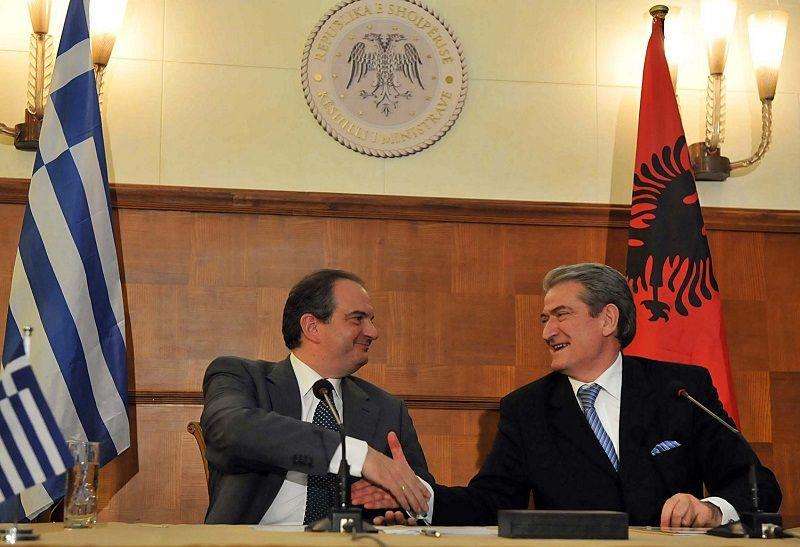
During the final phase of the negotiations, there were setbacks due to Albanian obstructionism and the Greek side was therefore forced to proceed with linking the negotiations on the EEZ with the ratification by the Greek parliament of the EU-Albania agreement (Stabilization and Association Agreement), which Tirana had long desired but had been pending ratification by the Parliament for a long time. With this move, political pressure from Dora Bakoyannis and discreet consultations, the obstacles were finally overcome and the two issues moved forward in parallel. The negotiations were concluded immediately and Costas Karamanlis immediately traveled to Tirana where the Foreign Ministers of the two countries signed the Agreement on the Delimitation of the Maritime Zones on 27 April 2009. The presence of the two Prime Ministers underlined the strategic importance that K. Karamanlis personally attributed to the entire project, which thus marked its first success. It is worth noting here that this agreement with Albania was the product of very serious preparation by a team of experts from the Ministry of Foreign Affairs who worked intensively under the leadership of Ambassador G. Savvaides. However, it was also groundbreaking since it established for the first time a "multi-purpose boundary", thus including both traditional zones (territorial waters-continental shelf) and new jurisdictional zones such as the Exclusive Economic Zone.
While the agreement was headed for ratification by the parliaments of both countries, after the Greek elections of October 2009 the Albanian opposition appealed against the Agreement to the Albanian Constitutional Court, arguing that the Greek islets north of Corfu, which are mentioned in the agreement, do not have a continental shelf and, therefore, Greece was given more maritime space than it is entitled to. Another argument of the Albanian opposition was that in order to attend the negotiations the Albanian delegation had to first formally obtain the permission of the President of the Republic.
The Constitutional Court of Albania declared the agreement invalid at the end of January 2010, citing procedural and substantive violations, which were in conflict with the Constitution and with the third UN Convention on the Law of the Sea of 1982 (without clarifying what these substantive violations are). This development strongly smells of foreign interference and in any case constitutes a clear and blatant breach of what was agreed between the two sides. It also constitutes a betrayal of the Albanian side towards its European neighbor towards whom it had, and continues to have, specific European commitments for good neighborly behavior.