
 At a glance
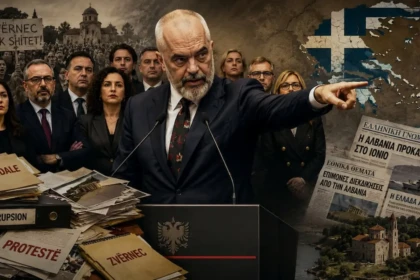
 The new year in Albania opened with a sharp clash between political power and the media, bringing the issue of the limits of public criticism and press freedom back to the fore. Statements and interventions by Prime Minister Edi Rama to journalists have caused widespread concern, not so much for their content, but for the climate they are shaping in the public sphere.
Στο επίκεντρο βρέθηκε η αντιπαράθεση με τη δημοσιογράφο Klodiana Lala, η οποία, με αφορμή τις πρόσφατες πλημμύρες, έθεσε δημόσια ερωτήματα για την τύχη του αποτεφρωτήρα απορριμμάτων στα Τίρανα. Το έργο, που είχε παρουσιαστεί ως βασικός πυλώνας της περιβαλλοντικής πολιτικής της κυβέρνησης, παραμένει ανενεργό και βρίσκεται υπό δικαστική διερεύνηση για πιθανή διαφθορά. Αντί για τεχνικές ή πολιτικές απαντήσεις, ο πρωθυπουργός επέλεξε να απαντήσει με προσωπικούς χαρακτηρισμούς, αποδίδοντας στη δημοσιογράφο άγνοια και σκοπιμότητα.

This particular reaction is not considered isolated. Observers of Albanian political life point out that recently Rama has often adopted a confrontational tactic towards critical voices in the media, turning criticism into a personal confrontation. A few days earlier, he had a public dispute with presenter Blendi Fevziu, with the prime minister responding to television criticism via social networks, using ironic comments and visual material.
These practices have mobilized journalistic associations and organizations that monitor the state of press freedom in the country. The Albanian Journalists' Association, in a statement, stressed that the aggressive rhetoric from government lips is not just a matter of style, but a form of indirect pressure that undermines the role of journalism as a mechanism for checking power. As it is pointed out, public confrontation cannot replace institutional accountability.
The Safe Journalism Network made similar observations, warning that the shift from political questions to personal attacks weakens public debate. Particular reference was made to the increased risk of targeting female journalists when criticism is met with disparaging characterizations rather than with documented positions.
According to political analysts, this tension is not unrelated to the broader political context. Cases being investigated by the Justice Department, crisis management issues and the pressure of the country's European path create an environment of increased political attrition. In this context, the conflict with the media is perceived by many as an attempt to change the agenda.
The question now concerns not only the behavior of a prime minister, but the overall resilience of the institutions. The relationship between political power and journalism in Albania appears to be tested at a time when transparency and trust remain crucial prerequisites for the country's democratic functioning and international credibility.