When was gjirokastra Built and how did it get its Name? - its history until 1914 - does its ottoman past exist?
A few days ago we read an excellent and extremely interesting article by Panagiotis Savvidis on protothema.gr (13 / 04 / 2021), according to which Albanian Prime Minister Edi Rama signed an agreement with Turkish Minister of Culture Mehmet Nuri Ersoy for the restoration of Ottoman heritage in the city of Gjirokaster. We decided to deal with this issue as well, because this is another provocative albanian action, which distorts history...
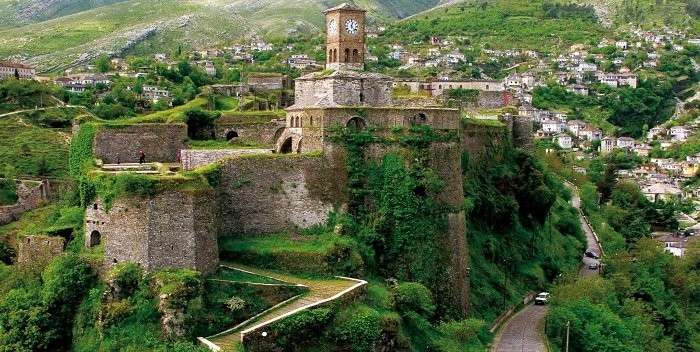
Brief history of Gjirokastra
As we read in Panagiotis Savvidis' article, Rama, who does not hide his pro-Turkish sentiments, met with the Turkish delegation in traditional house of the city of Gjirokaster, which was recently restored by the so-called Turkish Cooperation And coordination Agency (TIKA), which carries out similar projects in balkan countries which in the past were territories of ottoman empire.

Someone ignorant or someone European official concludes from reading all this that gjirokaster is an Albanian city, which was ruled by the Ottoman Turks. for many years, they built great monuments and had a significant contribution to its development. Let's look at the reality. Gjirokastra is built at a height of 300 m., on a valley between Platovouni and the Drinos RiverVery close to Gjirokastra was the ancient Greek city of Antigoneia, built in 296 BC by Pyrrhus in honor of his first wife. The movable finds from the Antigonia (ceramics, coins, tools, works of art) indicate a developed social and cultural level, comparable to other continental cities (EPIRUS, 4,000 YEARS OF GREEK HISTORY AND CULTURE, ATHENS PUBLICATIONS). Of course, the Albanians all of this, as we have written in the past, they claim that all of these are their own creations.
Antigone Seems to have been one of the 70 cities of Epirus where were destroyed by the Roman legions of Aemilius Paullus in 167 BC. We do not know whether it was rebuilt. However, a three-aisled basilica, in which a mosaic floor with a Greek inscription is preserved, indicates human presence in the area during the early Christian centuries. As has happened in many other places, when a city is destroyed or deserted because its location is precarious, its inhabitants move to a neighboring, safer location.

This is, in our opinion, the reason that led the residents of the area to founding of GjirokasterThe city is first mentioned in 1336 as Gjirokastra or Argyroupoli, as part of the Byzantine Empire. Later, it became the center of a local principality under Albanian lord Gion Zenebisi(1373 – 1417), while in 1431 it was occupied by the Ottomans. Its Albanian name is GjirokasterK. Economou interprets it from a previous Albanian press Gjinokaster= castle of Ginis with Albanian inflection of the interphonetic η to r. (CHALARALAMBOS P. SYMEONIDIS, "ETYMOLOGY OF MODERN GREEK ECONOMYMS").
Economou adds that the adjective Ginis <Albanian. gjini-a, which means kinship. However, there is another version. The castle that gave its name to Gjirokastra was built by John (Gino) Bua (Albanian: Gjin Bue Shpata) (1310 – 1399), who later descended into what is now the Greek Epirus and in 1374 conquered the Arta, which he made part of his state, while he later conquered part of AitoloakarnaniaHe Tried unsuccessfully four times to understand the Ioannina, but failed, as he was defeated in three of them by the Despot (ruler, ruler) of the city Thomas Preloubos, also known as "Albanicide"The theory relating the Gjirokastra with the princess I am silvering Monovyza., which we have also mentioned in our article on 10/2/2019 is not true, as it is likely argyro was a creation within the context of a legend.

According to Konstantinos Koulidas, the Gjirokastra was conquered by the Ottomans in 1418., a year after Avlona and stayed for 495 years, until 1913, under Ottoman ruleIn 1431 the Ottomans founded the sanjak of Arvanitia (Sandjak Arvanya or Arvanutluk) in the Gjirokaster region, based in Gjirokaster. In 1431 the first census was taken by the Ottomans in the parts of Epirus they had occupied. K. Koulidas writes: "The city of Gjirokastra was a fiefdom of the sanjak bey Ali Bey. It consisted of out of 121 complete families headed by a male, 15 families headed by a widower/single person and 27 headed by a woman/widowTotal number of Christian families - households 163. Total annual income including the bazaar 26,938 aktsedes (white).
These extremely interesting data come from the ottoman cadastre published by Halil Inanlcik in Ankara in 1954 and in a second edition in 1987. Of course, the information it gives us is valuable, because it includes not only the names of the settlements, but also the number of families residing in them and many other interesting facts (Source: KONSTANTINOS I. KOULIDAS, "THE CENSUS OF SETTLEMENTS IN 1431 IN THE VILLAGE OF ARGYROKASTROS FROM THE CASTICHO OF H. INALCIK, ANKYRA 1987 in "NORTHERN EPIROTICS, VOLUME VI, IOANNINA 2018).

THE Panagiotis Aravantinos στη ΧΡΟΝΟΓΡΑΦΙΑ ΤΗΣ ΗΠΕΙΡΟΥ, τόμος Β’, ΑΘΗΝΑ 1856, γράφει για το Αργυρόκαστρο: «Αργυρόκαστρον – Η πάλαι πόλις Αντιγόνεια κατά τον Μελέτιον λανθάνοντα εις τούτο (σημ. όπως είδαμε το Αργυρόκαστρο είναι χτισμένο κοντά στην αρχαία Αντιγόνεια αλλά δεν ταυτίζεται μαζί της), Αργυρίνη δε ή Αργυροπολίχνη παρά των Βυζαντινών καλουμένη πριν ή κτισθεί η Δρυϊνούπολις. Κατά την παρελθούσαν εκατονταετηρίδαν (σημ. 18ος αιώνας), οι εν Αργυροκάστρω Χριστιανοί ήταν πλείονες των Οθωμανών και απολύτως σχεδόν εκείνοι διευθετούσαν τα αστικά δίκαια, όντες πολλοί ευγενείς κτηματίαι και μεγαλέμποροι εσχετισμένοι μετά της Βενετίας. Αφ’ ου η έδρα της τοπαρχίας (1770), μετετέθη εις το Δέλβινον, ήρξαντο οι Οθωμανοί ίνα καταπιέζωσιν απανθρώπως τους συμπατριώτας των…». Συνεχίζοντας ο Αραβαντινός, γράφει ότι σταδιακά άρχισαν να εγκαταλείπουν την πόλη οι πλουσιότεροι κάτοικοί της και να εγκαθίστανται στα Ioannina, την Constantinople και αλλού. Ακολούθησαν και άλλοι Χριστιανοί και έτσι οι Οθωμανοί βρήκαν την ευκαιρία να εποικήσουν τοGjirokastraμε αρνησίθρησκους (εξισλαμισμένους) των γειτονικών χωριών.
THEΑραβαντινός, αναφέρεται και στο έθνος των Αργυρίνων το οποίο κατά τον Λυκόφρωνα ζούσε στις νάπες (=δασώδεις ένυδρες περιοχές, κοιλάδες )των Κεραυνίων Ορέων και τους σχετίζει με το Gjirokastra. Ίσως λοιπόν, το όνομα του Gjirokastra να προέρχεται από τους Αργυρίνους (Κάστρο των Αργυρίνων), κάτι που δεν έχει επισημανθεί μέχρι σήμερα. Το κάστρο αποτελεί τοπόσημο της πόλης και αυτή η εκδοχή, είναι κατά την άποψή μας η επικρατέστερη.
Ποιο είναι λοιπόν το Οθωμανικό παρελθόν της πόλης που θέλουν να αναδείξουν ο Έντι Ράμα και οι Τούρκοι; Οι εξισλαμισμοί και οι βαρβαρότητες σε βάρος των Ελλήνων; Το τζαμί του Αργυροκάστρου, που χρονολογείται από το 1757 και μια οθωμανική αγορά, δεν νομίζουμε ότι αποτελούν κάτι συγκλονιστικό. Να σημειώσουμε εδώ, ότι το 2005 μετά από πολύχρονες διαβουλεύσεις, ο ιστορικός πυρήνας του Αργυροκάστρου, εντάχθηκε στον κατάλογο με τα μνημεία Παγκόσμιας Κληρονομιάς της UNESCO. Ήταν λοιπόν απαραίτητο να τονιστεί το «φτωχό» αλβανικό παρελθόν του Αργυρόκαστρου; Τόσες άλλες πόλεις με έντονο μουσουλμανικό στοιχείο και σημαντικό οθωμανικό παρελθόν έχει η Αλβανία.
Γενικότερα, η στάση της Αλβανίας σήμερα είναι άκρως φιλοτουρκική. And since we are being accused of our articles About albania, let's see what one of the most remarkable politicians, in our opinion of course, of the last 30 Years writes. On February 22, 2021, the Thesprotian politician, former Minister Alekos Papadopoulos, published an excellent article entitled "The Turkification of Albania".

Especially now, when it seems(?) that they are underway border rearrangements in the Western Balkans, with the integration of Kosovo in the Albania and disappearance of Bosnia and Herzegovina, our country must show great caution.
Okay, the gentleman did very well. Dendias in the AnchorBut let's not forget that there is also Northern Epirus, where the Eddie Rama tries in various ways to harm the greek national minority. And blocking Albania's path to the European Union cannot be the only weapon in Greece's diplomatic quiver... We see the bottomless audacity of the Turks.
When Erdogan talks about 250,000 (!) relatives of The turks living in Thrace, greece Is silent about the greek ethnic minority of Albania. And of course, the Treaty of Lausanne is not mentioned anywhere in "Turks» but exclusively in «Muslims", who are around 120,000 and not 250,000, while in 1923, according to the Greek side, 105,438 Muslims lived in Thrace. Correspondingly, the Greeks of Constantinople, Imbros and Tenedos, who remained in Turkey, were approximately 110.000. Today, after persecutions and a series of measures against them, they do not exceed the 5.000… And this, at some point, some Greek politician should remind the Turks…
source: protothema.gr/ Michalis Stoukas