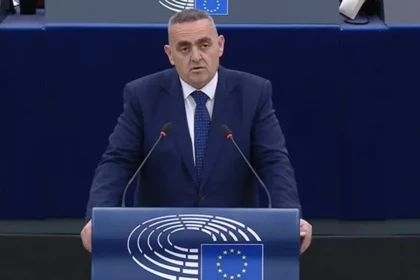
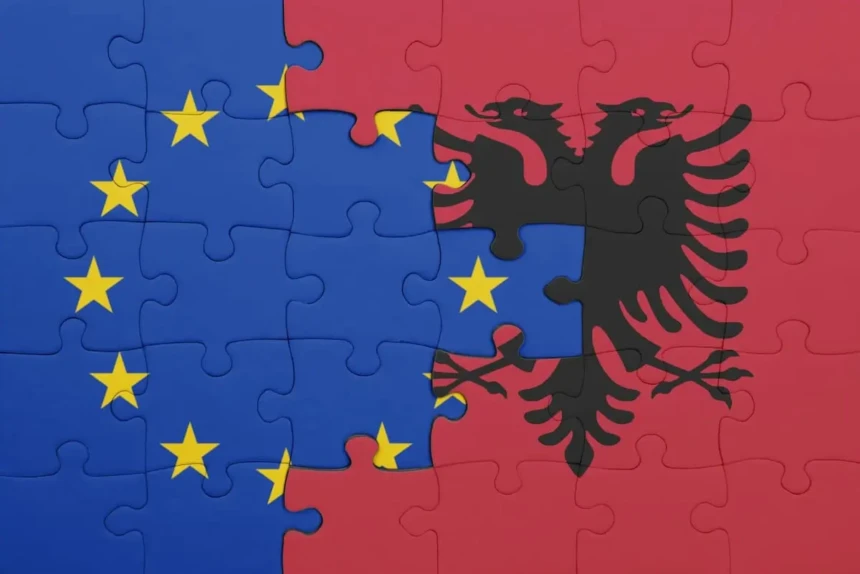
The European Parliament published the draft resolution on the European Commission 2025 Report on Albania, reflecting in an analytical manner the progress, but also the serious outstanding issues that still accompany the country's accession process to the European Union.
The text confirms that enlargement remains a strategic choice of the EU for the stability and security of the European continent, while recognizing that Albania has maintained a clear and consistent European orientation, in full alignment with the Union's common foreign and defense policy.
Accelerated accession process, but not without conditions
According to the resolution, Albania has been a candidate country since 2014, started negotiations in 2022, successfully completed screening in 2023 and opened all negotiating capital in just 13 months, from October 2024 to November 2025. The European Parliament describes this pace as “exceptional”, but underlines that progress must be essential and irreversible, not just formal.
The albanian government's ambition to close negotiations by the end of 2027 is Welcomed, but comes with a clear warning: the credibility of enlargement depends on the full implementation of the reforms in practice.
Democratic institutions and elections
Particular emphasis is placed on the electoral framework. The Commission considers it to be generally adequate for the holding of competitive elections, however Parliament reiterates serious concerns about:
- unequal political competition,
- misuse of administrative resources,
- allegations of vote buying,
- pressure on voters.
It is emphasized that the recommendations of the OSCE/ODIHR and the Venice Commission have not yet been fully implemented, with the European Parliament calling on the government and opposition to comprehensive and substantial electoral reform, in collaboration with civil society.
Political polarization and parliamentary control
The resolution expresses strong concern about the ongoing political polarization and confrontational public discourse, which – as it is pointed out – undermine citizens' trust, the functioning of Parliament and the effective control of the executive branch.
There is a call for increased transparency in the legislative process, meaningful participation of civil society and a stronger role for independent institutions.
Rule of Law and Justice
The continuation of the judicial reform and the vetting process of judges and prosecutors, which has strengthened accountability, are positively assessed. However, serious problems remain:
- low efficiency of the courts,
- backlog of pending cases,
- inconsistency in case law,
- attempts to exert undue pressure.
Parliament calls for further strengthening of the independence and operational capacity of judicial governance bodies, as well as investments in infrastructure and digitalisation.
Corruption and organized crime
Corruption is described as a "serious and persistent problem." Despite the improvement of the institutional framework, Albania is called upon to demonstrate tangible results in investigations, prosecutions and final convictions, especially in high-profile cases.
At the same time, emphasis is placed on combating organized crime, money laundering and drug trafficking networks, by strengthening cooperation with European organizations.
Fundamental rights and freedom of the media
The resolution highlights the need for effective protection of freedom of expression and media pluralism. it calls For:
- transparency in media ownership,
- protection of journalists from political and economic pressures,
- effective investigation of threats and attacks.
At the same time, Albania is called on to strengthen the protection of minorities and vulnerable groups, while concern is expressed about rhetoric against gender issues in political discourse.
Economy, social dialogue and environment
Albania's participation in the EU's new development plan for the Western Balkans is recognized, but it is emphasized that structural weaknesses remain, such as the shadow economy and the unfavorable business environment.
Particular emphasis is given to social dialogue, with the European Parliament expressing dissatisfaction with the rare convening of the National Labor Council and calling for the substantive participation of the social partners.
In the field of environment and climate change, the report records zero progress in the last year, an element that is considered particularly worrying.
EU foreign policy and support
Albania's full alignment with EU foreign policy, its participation in security missions and its role in regional stability are positively assessed. European financial support through IPA III and the Reform and Development Mechanism is welcomed, but with a clear condition that it is linked to measurable and verifiable results.
Conclusion
The overall message from the European Parliament is clear: Albania has come a long way and is moving rapidly towards the EU, but the final outcome of the accession process will be judged by the quality of democracy, the rule of law and the substantive implementation of reforms – not by timetables.