
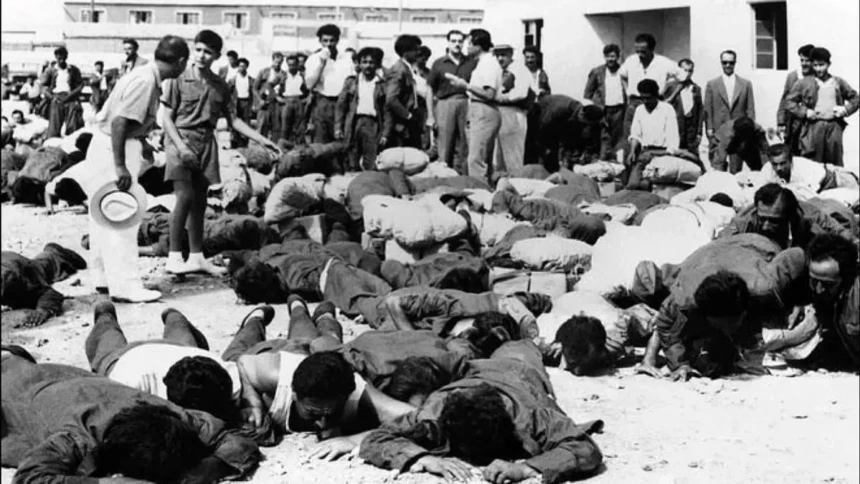
Μία από τις πιο άγνωστες και μαύρες ιστορίες του εμφυλίου είναι το κεφάλαιο που έκλεισε ακριβώς επτά χρόνια μετά την ολοκλήρωση του. Αφορά τις συνθήκες σκλαβιάς που έζησαν οι όμηροι που πήραν μαζί τους κατά την άτακτη υποχώρηση τους στην Αλβανία μετά την ήττα στον Γράμμο οι δυνάμεις του ΔΣΕ. Ένα μείγμα από αιχμαλώτους του τακτικού στρατού, ανδρών και γυναικών από γύρω χωριά αλλά και ανθρώπων που ακολούθησαν τις δυνάμεις του ΕΛΑΣ και πίστεψαν ότι στην γειτονική χώρα θα ζήσουν την ζωή που ονειρεύτηκαν σε μία σοσιαλιστική χώρα και τελικά αναγκάστηκαν να δουλεύουν κάτω από άθλιες συνθήκες σχεδόν σαν αιχμάλωτοι πολέμου.
Ας πάρουμε όμως τα πράγματα από την αρχή: Πριν μπει το καλοκαίρι του 1949 και γείρει οριστικά η πλάστιγγα υπέρ του τακτικού στρατού ο Δημοκρατικός Στρατός (ΔΣ) είχε καταφέρει καίρια πλήγματα κυρίως στην 75η ταξιαρχία όπου πέρα από τις ανθρώπινες απώλειες που προκάλεσε κατάφερε να αιχμαλωτίσει τόσο αξιωματικούς όσο και οπλίτες του Ελληνικού Στρατού. Προσπάθησε να τους εντάξει στις δυνάμεις του ΔΣΕ – ανεπιτυχώς, καθώς οι τελευταίοι γνώριζαν ότι ουσιαστικά ο πόλεμος είχε κριθεί – παρέμεναν όμως αιχμάλωτοι και ακολουθούσαν τις κινήσεις του ΔΣ στα βουνά της Δυτικής Μακεδονίας και την Ηπείρου.
After the collapse of the DSE in August 1949, the guerrillas crossed into Albania and handed over their weapons to the Albanians. In the confusion of the retreat, those of the prisoners who were able fled to the Hellenic Republic, but many followed the guerrillas to the neighboring country and were trapped there.
In the following weeks, the DSE fighters were divided among the Eastern Bloc states, but no Eastern state wanted to take the prisoners who crossed into Albania so as not to create diplomatic friction with Greece, so these prisoners remained in Albania, prisoners of an army (the DSE) that no longer existed.
The testimonies
Ανάμεσα στους αιχμαλώτους ήταν και ο νεαρός τότε γιατρός – και μετέπειτα γνωστός χειρούργος στην Αθήνα – Νικήτας Αγαπητίδης ο οποίος κατέγραψε ψύχραιμα δεκαετίες αργότερα την εμπειρία του στο βιβλίο «Το Χρονικό της Αιχμαλωσίας (1949 – 1956). Εθελοντής οπλίτης από τα Δωδεκάνησα θα πιαστεί αιχμάλωτος από τους αντάρτες έξω από την Πυρσόγιαννη, την ώρα που χειρουργούσε. Θα τους ακολουθήσει έως τα τέλη Αυγούστου και θα περάσει «μέσα», όπως αποκαλούνταν η Αλβανία, μετά την τελική εκκαθάριση. Εκεί, αρχικά θα φιλοξενηθεί αρχικά σε ένα νοσοκομείο ανταρτών στην Κορυτσά και στην συνέχεια πιστεύοντας η τύχη τους θα περάσει στα χέρια των Αλβανών. Όπως αφηγείται αρχικά θεωρούσαν την συγκεκριμένη εξέλιξη θετική καθώς πίστευαν ότι πλέον είχαν να κάνουν με ένα κράτος μέλος του ΟΗΕ το οποίο μέσα από τις τυπικές διαδικασίες θα φρόντιζε για τον επαναπατρισμό τόσο τον δικό του όσο και των εκατοντάδων άλλων που βρέθηκαν στην ίδια δυσχερή θέση.
The book describes the miserable conditions of their detention in concentration camps without the minimum sanitary conditions and the meager food rations, as well as the exhausting work from sunrise to sunset that led several of our compatriots to death. As it specifically states, there were cases where "the prisoners, in addition to punishments, are also sent to do hard work, often pointless. They are made to go into swamps to cut rushes, but the swamps are full of leeches and soon their legs start bleeding from many places. The blood doesn't stop and the prisoners devise all sorts of ways to stop it.».
There are reports of escape attempts, which resulted in several years of imprisonment, of sadistic leaders who treated them as "saboteurs in the vision of socialism" and other tragicomic stories. And all this as the years pass, changing camps and jobs (agricultural, road-building, drainage, construction, etc.) without any light on the horizon.
The Greek side did not wish to open a dialogue with Albania – with which, let us not forget, it was at war and was questioning its territorial status – but at the same time it was afraid to touch on the issue directly if it did not clarify the “nationalism” of our returning citizens.
In 1956, a formula for repatriation was finally found with the caveat that they had entered Albanian territory illegally and as such the Albanians deported them.
The return
In August 1956, Greece will send the ship "Aliakmon" to the port of Durres to receive 217 prisoners out of a total of more than 500. This is essentially the first batch of people who had a "white record of political beliefs" and who were transferred to Piraeus on August 24, 1956, hence the central photo with the liberated prisoners kissing the Greek soil where the "Aliakmon" docked.
In the following period, other smaller groups were also liberated. What happened to all these people afterwards? They organized themselves into a repatriated association, “The Resurrection” with the aim of receiving a small compensation so that they could start their lives over again. The only help they received was 300 drachmas from the Greek Red Cross and a…blanket from the State. Accordingly, the soldiers who had been captured were compensated with 20 drachmas and the officers with 1,200.
“Not even a single moral reward for some who suffered was achieved... The Homeland seemed very frugal. It only gave the right to all those who were sick or disabled to present themselves to Committees to be hospitalized or to retire. Which of course was done. To the 'healthy', for so many years, only the fifteen-day salary from repatriation until dismissal. Nothing else".
Kostis Christodoulou / news247





Πω πω, σοκαριστική ιστορία! Ποτέ δεν το φανταζόμουν αυτό. Πόσα κρυμμένα μυστικά ακόμη… Πρέπει να διαβαστεί οπωσδήποτε!
Σκέψου να επέστρεφες μετά από τόσα χρόνια, σκλάβος σε ξένη χώρα. Πόσοι τα γνώριζαν αυτά;
Πόσα ακόμα κρύβει η ιστορία μας από εκείνη την περίοδο! Συγκλονιστικό άρθρο.
Συγκλονιστικό! Φαντάσου τι βίωσαν αυτοί οι άνθρωποι τόσα χρόνια αιχμαλωσίας. Μια άγνωστη σελίδα ιστορίας.
Πόσοι άραγε ξέρουν αυτή την πικρή ιστορία; Ντροπή μας που ξεχάσαμε τόσα.
Απίστευτο! Αυτή η πτυχή του εμφυλίου ήταν πραγματικά άγνωστη σε πολλούς. Τι τράβηξαν οι άνθρωποι!
Πόσα άγνωστα κεφάλαια έχει ακόμα ο εμφύλιος… Τρόμαξε η ψυχή μου με όσα διάβασα.