


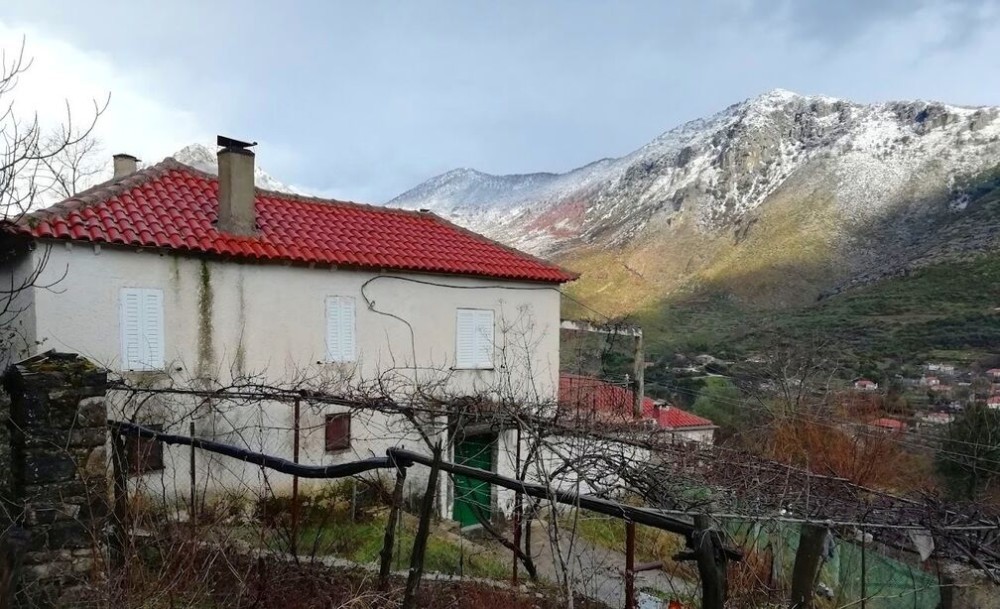
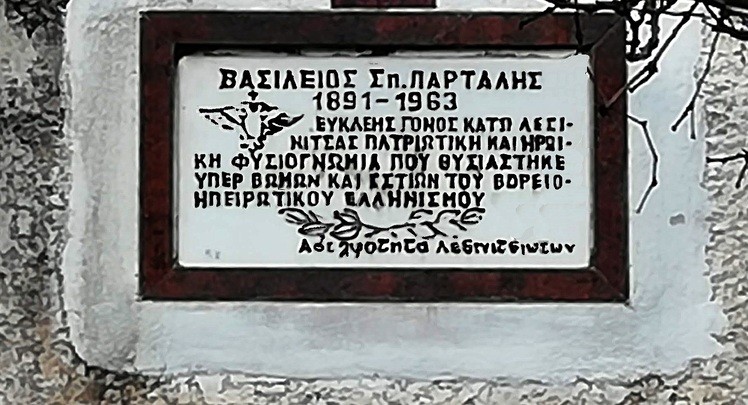
Vassilis Partalis Of spyros Was born inSimatati of Lesinitsain 1891. He learned his first letters at the primary school in Ai Nikolas of May. In 1909 at the age of 18 he emigrated for a better fortune in Wallachia (Romania). But he returns in 1911, obeying the cries of his homeland and joinsvolunteer in the Greek Armyfighting for the liberation of the Ioannina from the Turks. Later, he goes to Thessaloniki and takes part in the Greco-Bulgarian war where he is seriously wounded in the leg. In 1914 he fights withAutonomous Armyfor the liberation of Northern Epirus.
THE Liatos, όπως αποκαλούνταν στο χωριό ο Βασίλης, νυμφεύτηκε το 1920 την Κυράνω το γένος Ντάλλα από το Τσαούσι αποκτώντας μαζί της τρεις κόρες, την Μέλπω, την Καλυψώ και την Αγγελική, καθώς και πέντε αγόρια τον Σπύρο, τον Γιάννη, τον Κώστα, τον Δημήτρη και τον Σταύρο. Εργαζόταν σαν αγωγιάτης (μεταφορέας) με τα ζώα του στην περιοχή του Βούρκου και των Ριζών ώστε να εξασφαλίσει τα προς το ζην για την πολυμελή οικογένειά του.
Το 1933, η αλβανική κυβέρνηση επέβαλε το κλείσιμο των ελληνικών σχολείων στη Βόρειο Ήπειρο. Ο Βασίλης ως αγνός πατριώτης συμμετείχε ενεργά στον αγώνα των Βορειοηπειρωτών για το σχολικό ζήτημα και συνεργάζεται με το Ελληνικό Προξενείο στους Αγίους Σαράντα. Δραστηριοποιείται στη συγκέντρωση των υπογραφών από τις κοινότητες της περιοχής και μεταφέρει με άκρα μυστικότητα τους καταλόγους στο Ελληνικό Προξενείο ώστε να υποβληθεί υπόμνημα στο Διεθνές Δικαστήριο της Χάγης. Αργότερα, το 1935, το Δικαστήριο δικαίωσε τον αγώνα των Βορειοηπειρωτών και τα ελληνικά σχολεία ξανανοίγουν.
In 1940, he waited with great enthusiasm for heradvance of the Greek Army, where in November of the same year he liberated Lesinitsa. Despite his large family occupations he standson the side of the Greek soldiers και βοηθάει στον πόλεμο κατά του Ιταλού επιδρομέα. Με την οπισθοχώρηση του Ελληνικού Στρατού όμως τον καταδίωκαν οι Ιταλοί (και παρ’ ολίγον να φονευθεί σε μάχη στο Σιματάτι). Εκτός από τη συμμετοχή του στον πόλεμο εναντίον τους, είχαν στη διάθεσή τους και αρχεία της αλβανικής κυβέρνησης από το 1934, λόγω της πατριωτικής δραστηριότητάς του στο σχολικό ζήτημα.
In September 1945, coming as an acolyte from Agioi Sarandais arrestedin the river Dibri by the communists and is taken to Theologos atpalace of Giori Zisis. There he experiences the first tortures. Since no incriminating evidence is found, he is released after 5 days.

On January 16, 1946,albanian security (sigurimi)surrounds his house and arrests him again. He is led to his dark cellsKalia (Argyrokastro Prisons) κατηγορούμενος για κατασκοπευτική δράση. Δεν αποκαλύπτεται τίποτα και τον Μάρτιο του 1947 αποφασίζουν να συλλάβουν και τη σύζυγό του Κυράνω όπου υπέστει και αυτή 45 μέρες βασανιστήρια και ανάκριση. Εκείνη την εποχή είχαν μπει στο στόχαστρο από το κομμουνιστικό καθεστώς πολλοί Έλληνες πατριώτες στις περιοχές της Βορείου Ηπείρου. Υπήρχε extermination planthem, as opponents of the regime, accused of (allegedly) espionage in favor of Greece. The passage fromorder of the prosecutorin the trial that followed later.
"...Internally the groups were associated with themanagement team of Lesinitsathrough itVasilis Partaliswho, under the guise of being a teacher, came into contact with various groups. The team of Dibri e.g. were contacting himVasilis Partalisthrough itVangelis Ziangas, as the other members of the group, due to secrecy, did not know the links……The Droviani group was connected to the lesinitsa Management group throughVasilis Partalis and Pavlos Konomos, who only knew of this group's links. With himVasilis Partalisthe group of hodzias was Also Connected....In november 1945 oCharalambos Lezossent the Agent to ioanninaChristos Philippito connect with the enemy espionage and from then until he was arrested he continued the activity as the person in charge of the espionage for the villages of the Roots of Delvinos, having his fellow villagers as partners in the management team of Lesinitsa,Photo by Lezo and Vassilis Partalis…”
In June 1947 Vassilis is tried in10 years in prison και παίρνει το δρόμο των εξοντωτικών στρατοπέδων. Η σύζυγός του εξορίζεται στην Κρούγια και μετά από 2 χρόνια τον Ιούλιο του 1949 αφήνεται ελεύθερη. Το 1952 βγαίνει από τη φυλακή και ο Βασίλης έχοντας εκτίσει τα 6 από τα 10 χρόνια της ποινής. Για τα επόμενα 7 χρόνια επιστρατεύονται δυναμικά και οι δυο τους για να ανορθώσουν το κατεστραμμένο τους νοικοκυριό.
However, in 1959, being with his herd that was grazing on the Politsa mountain, he was arrested again. And when he resists because he felt himself innocent, the insured (SK) asks them. –"Can you see Delvinaki from here?". –"My homeland, it's sir", replies Vassilis. When they brought him down to Ano Lesinitsa, they called out to the residents saying: –"Come see the lads of greece How we tie them". Proud Liatos answers them: –"Greece Never dies, you take one, a thousand stand up and become more Greek". Στον εξονυχιστικό έλεγχο που κάνουν στο σπίτι του δεν βρίσκουν τίποτα το ενοχοποιητικό. Παίρνουν μαζί τους σαν ντοκουμέντο «εχθρικό» την φωτογραφία του Δεσπότη της Βελλάς με Βορειοηπειρώτες μαθητές. Δεμένο με χειροπέδες τον μετέφεραν στους Αγίους Σαράντα και από κει στα Τίρανα, δύο χρόνια συνέχεια σε ταλαιπωρίες και βασανιστήρια.
Ο Βασίλης έβλεπε πολλούς ανακριτές να μπαινοβγάνουν στο κελί του και να του μιλούν αλβανικά. Δεν τους απάντησε ποτέ προσποιούμενος πως δεν ήξερε ούτε μια λέξη αλβανικά. Ζητούσε μόνο να του φέρουν ανακριτή που να μιλάει ελληνικά. Μετά από δύο χρόνια, στο κελί μπήκε ένας ανακρίτης και του μίλησε ελληνικά –“Santa, I am your interrogator. My name is Vangelis.". Basil Jumped to his feet. –"Finally a Christian interrogates me. Write, sir, that Vassilis Partalis was born a Greek and will die a Greek", he said addressing the investigator Vangelis Kotte. The interrogator himself confessed years later that he had never seen such unwavering faith and determination in a prisoner in his years of investigative career. This was also the last interrogation. Judged in15 years in prisonand is transferred to the most infamous prisons in Albania.

Vassilis could not live long in his third imprisonment. Like this oneapril fool's day 1963he chills out in room 36 of the political prisoners in Bureli prison. Even today his grave remains unknown. All he left behind was a pair of prison clothes and a sticky note writing the charge of his imprisonment and thefalse witnessesfound at trial. His late homeopathic friend and fellow-prisonerdoctor Dimitris Oikonomou from Dibricloses his eyes and shrouds him. When starting his coffin for burial he recites chanting silently:
"You were not buried by a priest. No bells were rung No honors were given to you that you deserved KING, KING You are the martyr who stood upright in prison Until the last moment."
Sources-References
- Andreas Tsakas, The Cry of the Northern Continents, "Agia Veroniki" Sisterhood Edition, Thessaloniki 1997.
- The pulse Of lesinitsa Newspaper, September – October 1997
- T. Lahanas file (data from a photocopy in Albanian of the prosecutor's order)


Τέτοιες ιστορίες με συγκινούν. Να αφήνεις τη βολή σου για την πατρίδα. Αξίζει να τον θυμόμαστε!
Τι ιστορίες κρύβουν οι παλιοί αγώνες! Πόσα δεν ξέρουμε ακόμη για τέτοιους άντρες;
Re ti palikari! Afise tin xeniatia kai gyrise gia tin patrida. Pio aksizei aftos apo polous simerinous.
Στα 18 του ξενιτιά, στα 20 πίσω για την Ελλάδα. Τέτοιοι άνθρωποι γράφουν ιστορία!
Πω πω, τι γενναίος! Από τη Ρουμανία πίσω για να πολεμήσει, απίστευτο πατριωτικό πνεύμα!
Τι ψυχή είχε αυτός ο άνθρωπος! Άφησε την ξενιτιά για να πολεμήσει για την Ελλάδα. Αξίζει να τον θυμόμαστε.
Αυτοί είναι οι αληθινοί ήρωες! Άφησε τα πάντα για την πατρίδα, χωρίς δεύτερη σκέψη. Τι ψυχή!