
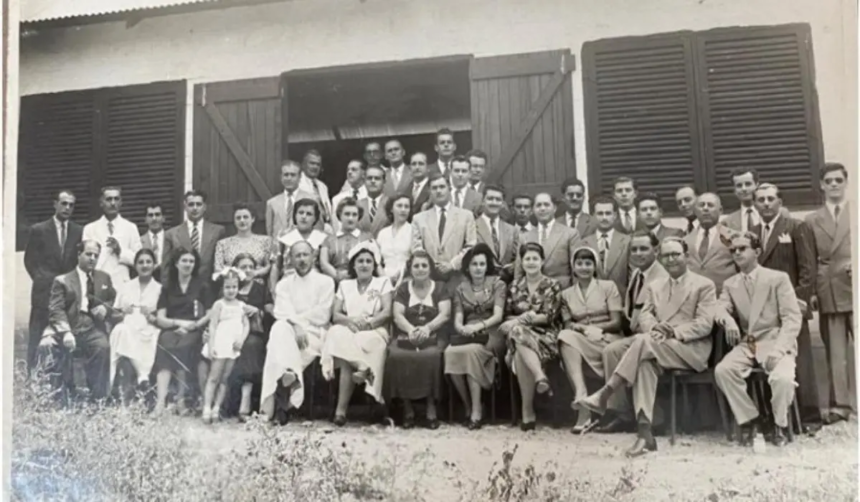
A lesser-known, but particularly important page in the history of Greeks abroad comes to the fore through the research of historian Antonis Chaldeos. From the first merchants who settled in West Africa in the late 19th century to the young Greek entrepreneurs who sought professional opportunities after the economic crisis, the Greek presence in the region spans almost a century and a half.
In his book "The Greek Presence in West Africa", the researcher documents the activity of Greeks in Nigeria, Ghana, Sierra Leone, Senegal and Guinea, revealing their decisive contribution to the development of trade and industry. Despite their relatively limited numbers, the Greeks managed to create businesses with a significant influence on the local economies.

Η αφετηρία αυτής της διαδρομής εντοπίζεται στο 1879, όταν ο Γεώργιος Ζοχώνης, με καταγωγή από τη Σπάρτη, ίδρυσε μαζί με τον Σκωτσέζο Τζορτζ Πάτερσον την εταιρεία PZ στη Σιέρα Λεόνε. Η επιχείρηση εξελίχθηκε σε σημαντικό εμπορικό δίκτυο, προσελκύοντας Έλληνες που εγκαθίσταντο σε μικρές πόλεις και χωριά της Γκάνας και της Νιγηρίας, δραστηριοποιούμενοι κυρίως στο εμπόριο κακάο και φοινικέλαιου. Λίγο πριν από τον Α΄ Παγκόσμιο Πόλεμο, περισσότεροι από 300 Έλληνες εργάζονταν ως αντιπρόσωποι της εταιρείας σε διάφορες περιοχές της Δυτικής Αφρικής.
Ιδιαίτερη θέση στην ιστορική έρευνα κατέχει η Σοφία Κούππα, η οποία το 1915 δραστηριοποιούνταν ως έμπορος στο Κονακρί της Γουινέας, εκπροσωπώντας τον εμπορικό οίκο Jabre Frères. Σε μία εποχή κατά την οποία η γυναικεία επιχειρηματικότητα ήταν εξαιρετικά περιορισμένη, η παρουσία της αποτελεί ξεχωριστό παράδειγμα ελληνικής επιχειρηματικής δραστηριότητας. Ο Αντώνης Χαλδαίος επισημαίνει ότι στα 17 χρόνια των ερευνών του στην Αφρική δεν έχει εντοπίσει αντίστοιχη περίπτωση Ελληνίδας με τέτοιες εμπορικές αρμοδιότητες εκείνη την περίοδο.
In the early 20th century, Greek businessmen such as Floionis, Thomopoulos and Mavridis gained a significant presence in the region, while later the Greek Cypriot Anastasios Leventis stood out. According to the research data, approximately 10% to 15% of cocoa production was in the hands of Greek business interests, mainly through PZ and the Leventis company.
Greek activity gradually expanded beyond trade, with significant investments in the food industry, beverage bottling, flour milling and later construction and metallurgy. Businesses associated with the Leventis, Koumandaros, Romaios and Barberopoulos families developed into large industrial units, particularly in Nigeria.
After World War II, a new wave of immigration occurred, with significant participation by Greeks and Cypriots. The Greek presence peaked in the 1960s, while in 1959 the first and only organized Greek community in the wider West Africa was established in Lagos, Nigeria.
The Greek footprint was not limited to entrepreneurship. In March 1960, the internationally renowned Greek architect and urban planner Konstantinos Doxiadis undertook the design of the new city of Akosombo in Ghana, as part of the modernization program promoted by the country's then president, Kwame Nkrumah. The city was designed with organized neighborhoods, schools, a market, and housing adapted to the needs of local families.
Since the 1970s and 1980s, the Greek presence began to gradually decline, due to political and economic changes in African countries. However, the economic crisis in Greece created a new migratory flow, with businessmen and professionals seeking opportunities in West Africa, even without previous family ties to the region.
Today, according to Antonis Chaldeos, approximately 100 Greeks are active in Ghana, mainly in the field of ship customs clearance, while in Nigeria there is still a Greek presence in industry and trade.
The history of the Greeks of West Africa highlights the dynamic of a Hellenism that managed to create strong economic and social roots thousands of kilometers away from the homeland. From the pioneering merchants of the 19th century to the new generation of entrepreneurs, their presence constitutes an important chapter of the Greek diaspora, which remains alive to this day.


Ναι, μωρέ, σιγά μη βρεις Έλληνα που να μην έκανε μπίζνες κάπου. Ακόμα κι Αφρική, wtf.
Pantou exete paei mono gia ta lefta. Kala den varethikate? Oi alloi den metran, mono ta dika sas. Xaxaxa.