

However, what all Greek Governments must know is that the issue (of Northern Epirus) exists. And what is forbidden in the world is the renunciation of the sacred claim for any reason… As far as Northern Epirus is concerned… the claim is sacred and inalienable.”
[George Papandreou (The Old Man of Democracy). From his speech in the Greek Parliament on 12/6/1960]
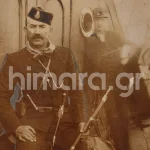
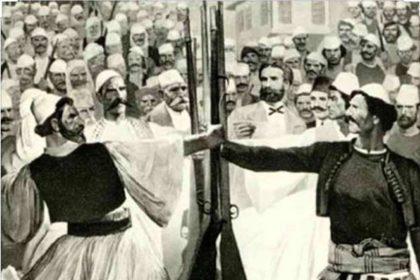
February 17, 1914, the day of the Proclamation of the Autonomy of Northern Epirus, is a major milestone in the turbulent historical course of Northern Epirus Hellenism.
The militancy of the people of Northern Epirus and their unwavering commitment to their Greek conscience, as well as their desire for freedom, resulted in the signing of the Protocol of Corfu (May 17, 1914), a legally binding document to this day, which granted full Autonomy to Northern Epirus.
Signing of the Treaty of London (May 1913)

Τον Μάιο του 1913 υπογράφηκε η συνθήκη του Λονδίνου, με την οποία τερματίστηκε ο A΄ Βαλκανικός Πόλεμος. Με τα άρθρα 2 και 3 της συνθήκης αυτής η Τουρκία παραχωρούσε στους ηγεμόνες της Βαλκανικής Χερσονήσου σχεδόν όλα τα ευρωπαϊκά εδάφη της Οθωμανικής Αυτοκρατορίας, εκτός από την Αλβανία, την φροντίδα της οποίας ανελάμβαναν συλλογικά οι έξι Μεγάλες Δυνάμεις (Βρετανία, Γαλλία, Ρωσία, Γερμανία, Aυστροουαγγαρία και Ιταλία). Με το άρθρο 5 της ίδιας συνθήκης την ευθύνη για τον καθορισμό των νησιών του ανατολικού Αιγαίου είχαν οι έξι Δυνάμεις. Το τραγικό δίλημμα είχε πια τεθεί.
A little later, In july, The Great powers Placed albania "under their guarantee", Which became a hereditary, sovereign and neutral hegemony, while in december 1913, with The shameful "Protocol of Florence", northern Epirus was Awarded To the newly established albanian state.
What events intervened and made things take such a dramatic turn since March? This development must be sought in the formation of the northern and eastern borders of the nascent state. It is obvious that Northern Epirus was sacrificed in order to compensate the neighboring country and make it a viable state.
The people of Northern Epirus reacted to this unnatural turn. Already, after the unfavorable development of the situation, "National Defense Committees" were formed in cities and villages and they established "Sacred Companies" and "Logistics".
The withdrawal of the Greek army and the uprising
On January 31, 1914, a communiqué from the Great Powers was delivered to the Greek government, which stated the demand, within a set deadline, for our army to withdraw from Northern Epirus. Otherwise, the islands of the eastern Aegean would not be given to Greece.
Athens complied and, with a communication from the Greek government to the ambassadors of the Great Powers, the army was withdrawing from Northern Epirus. Then the uprising of the Northern Epirus people began.
Himara was the first to rise up (February 9) with Spyromilios, who declared the autonomy of Epirus. At the same time, a Panepirotikos Congress was convened in Athens. Resistance was decided and Georgios Zografos, son of the Great Benefactor Christakis Zografos, from Kestorati, Gjirokastër, was appointed as the leader of the Struggle.
The Provisional Government of the Autonomous Epirus
Georgios Zografos had studied in Paris and Munich. In 1905 he was elected MP for Karditsa. In 1909 he took over the Ministry of Foreign Affairs. After the liberation of Epirus, Venizelos appointed him its Governor-General.
When he was assigned the leadership of the autonomous struggle, he resigned from his position and on February 12, 1914, he went to Gjirokastra. He immediately formed the Provisional Government of Autonomous Epirus.
He assumed the presidency himself, Foreign Minister Alex. Karapanos, Finance Minister Ioan. Parmenides, Military Minister Dimitrios Doulis, Education and Religion Minister Metropolitan Vasilios of Dryinoupolis, and members of the Government were Metropolitan of Korytsa Mr. Germanos and Metropolitan of Velas and Konitsa Mr. Spyridon.
After the formation of the Provisional Government, events developed rapidly. On February 16, autonomy was declared in Saranda and Delvino, and everything indicated that the uprising would spread throughout Northern Epirus.
The stance of the Greek forces

The big question that arose was the stance of the Greek army. Venizelos categorically assured the Great Powers that the Greek troops would withdraw from Northern Epirus and “would not offer resistance, nor support, nor encourage, directly or indirectly, any resistance against the state of affairs that the Great Powers had established.”
The problem was concentrated in the two major cities, Gjirokastra and Korçë.
The commander of Korçë was Colonel Alex. Kontoulis, an eccentric individual, with his own views regarding the rapprochement of Greeks and Turk-Albanians. Kontoulis handed over the city to the Albanians. After the evacuation of Korçë by the Greek army, again through the actions of Kontoulis, the areas of Moschopolis and Kolonia were handed over to the Albanians.
In Gjirokastra, things developed differently. The commander there was Major General Anast. Papoulas, who, when he realized that the residents were not going to surrender the city to the Albanians, did not insist.
The declaration of Autonomy
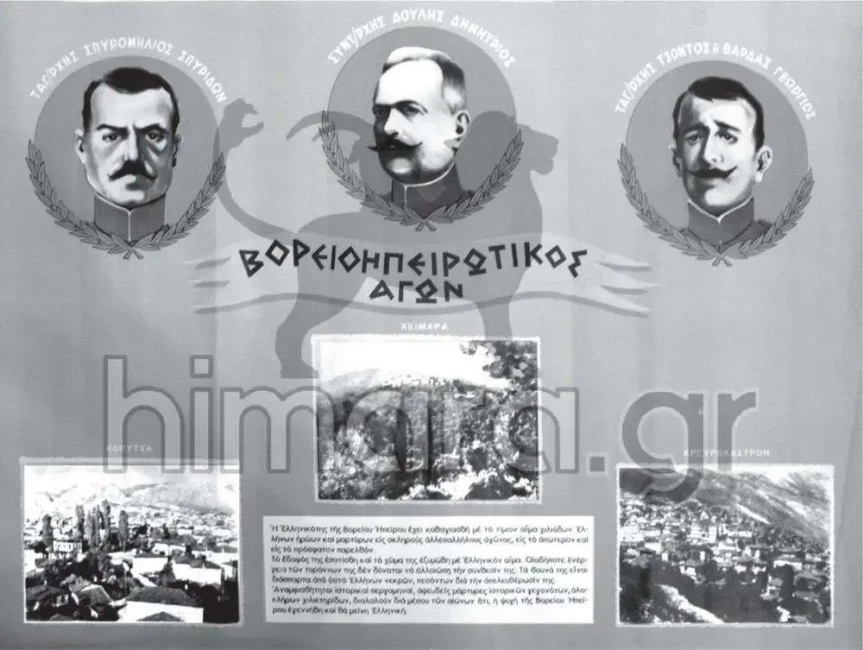
On February 17, 1914, Autonomy was solemnly proclaimed in Gjirokastra and the flag with the cross and the double-headed eagle was raised. In the meantime, on February 20, autonomy was declared in Leskoviki and on the 23rd of the same month in Premet. In the Premet area, the first serious battles with the Albanians took place. The victory of the autonomists in Premet surprised international public opinion and demonstrated that the revolutionary movement was not accidental.
The final outcome of the struggle was decided in Gjirokastra and Korçë. In Korçë, on March 19, 1914, an armed uprising of the Greek residents against the Albanians and their Dutch officers began. This uprising ultimately failed due to lack of supplies. In this uprising, 114 Greeks were killed, including 7 women and the deacon of the Metropolis, Vasileios Gkionis.
Shortly afterwards, the well-known Macedonian fighter Georgios Tsontos-Bardas, a major of artillery, arrived in Korçë. With his arrival, the struggle heated up and, after successful battles with the Albanians, during the last ten days of April, he tightly besieged Korçë.
Στον τομέα Αργυρόκαστρου η ισχυρή αλβανική πίεση είχε ως αποτέλεσμα τη μετακίνηση της Προσωρινής Κυβέρνησης στους Γεωργουτσάτες. Στη σκληρή μάχη που έγινε από τις 20 έως τις 23 Απριλίου στη Μονή Tσέπου, υπερίσχυσαν οι αυτονομιακοί, με συνέπεια τα αλβανικά στρατεύματα να υποχωρήσουν προς Βορρά. Από τις εξελίξεις αυτές φάνηκε καθαρά ότι οι Aλβανοί δεν ήταν σε θέση να ελέγξουν ούτε την περιοχή της Κορυτσάς και ούτε να καταλάβουν το Αργυρόκαστρο. H αλβανική κυβέρνηση, κάτω από τον κίνδυνο οριστικής συντριβής τους, ζήτησε την παρέμβαση της Διεθνούς Επιτροπής Ελέγχου για σύναψη ανακωχής.
The Corfu Protocol (1914)

The Provisional Government responded positively to the request. The members of the International Committee, a representative of the Albanian government and: G. Zografos and Alex. Karapanos, representatives of the Autonomous Epirus, met in Saranda. From there they went to Corfu, where on May 17 (new calendar) they signed a Protocol, which justified the struggle of the Northern Epirus people.
Mε το «Πρωτόκολλο της Κέρκυρας», όπως καθιερώθηκε να λέγεται, εξασφαλιζόταν ειδική ελευθερία και η συγκρότηση ειδικού σώματος Χωροφυλακής. Κατοχυρωνόταν η χρήση και διδασκαλία της ελληνικής γλώσσας και απαγορευόταν η είσοδος και η στάθμευση στις δύο επαρχίες «στρατιωτικών μονάδων μη αυτοχθόνων». H Βόρειος Ήπειρος με τις διατάξεις αυτού του Πρωτοκόλλου αποκτούσε ευρεία αυτονομία μέσα στα όρια της αλβανικής επικράτειας. Το Πρωτόκολλο συνυπογράφηκε από όλες τις πλευρές. Από την πλευρά των Βορειοηπειρωτών η κύρωση επιτεύχθηκε στο Πανηπειρωτικό Συνέδριο που συνήλθε στο Δέλβινο. Στο Συνέδριο αυτό συμμετείχαν αντιπρόσωποι από τις περιοχές Xειμάρας, Αγίων Σαράντα, Aργυροκάστρου, Πρεμετής, Πωγωνίου, Λεσκοβικίου, Eρσέκας και Κορυτσάς.
The representatives of Chimara refused to sign the agreements. They left the Assembly cheering the slogan that had become intertwined with their struggles and daily lives: Union or Death.
After the triumphant struggle of the Northern Epirus people and the achieved autonomy, the Powers of the Cordial Entente (Britain, France and Russia) consented to the occupation of the Provinces of Gjirokastra and Korçë by the Greek army. On 24 October 1914, the entire region was surrendered to the Greek troops.
The Northern Epirus issue at international conferences
In January 1916, representatives of Northern Epirus took part in the proceedings of the 1st Session of the 12th Term of the Hellenic Parliament. Let us recall the important Royal Decree of 3 March 1916 "On the extension of the force of law 258 to Northern Epirus" (Official Gazette of the Government of the Kingdom of Greece, 1st, 17 March 1916, no. 54).
Unfortunately, however, the Greece of 1916 was not the Greece of 1914. It had been eroded and destroyed by division. In early September 1916, Italy, with the consent of the Entente Powers, occupied Argyrokastro. The French did the same a month later in Korçë. In 1917, the Italians imposed an occupation regime on Ioannina, from where they were eventually forced to withdraw. Northern Epirus was lost.
An attempt to put an end to the tragedy of the Northern Epirus people was made by Eleftherios Venizelos in 1919. At that time, he reached an agreement with the Italian Foreign Minister Tommaso Tittoni that the provinces of Gjirokastra and Korçë would be united with Greece, but Rome broke the agreements.
In December 1920, Albania became A member of the League of Nations and in November 1921, Northern epirus Was Again awarded to albania. of Course, The flag of the cross was raised once again in korçë And gjirokastër during The greco-Italian war Of 1940, but, Unfortunately, the great powers of The Time once again reacted and prevented the integration of Northern Epirus into Greece.
Το Βορειοηπειρωτικό παραμένει εκκρεμές στο συμβούλιο των υπουργών των Εξωτερικών των τεσσάρων νικητριών Δυνάμεων (Ηνωμένων Πολιτειών, Σοβιετικής ‘Ένωσης, Βρετανίας και Γαλλίας). ‘Όπως είναι γνωστό στο Παρίσι το 1946 πραγματοποιήθηκε η Διάσκεψη των τεσσάρων νικητριών Δυνάμεων. Στο συμβούλιο των υπουργών των Εξωτερικών και πάλι δεν ικανοποιήθηκε το αίτημα της Ελλάδος και η Βόρειος Ήπειρος (αντέδρασε ο υπουργός των Εξωτερικών της Σοβιετικής Ένωσης Mολότωφ) παρέμεινε στην αλβανική επικράτεια.
Δεν υπάρχει καμιά άλλη μεταπολεμική διεθνής πράξη που να κατοχυρώνει νομικά το γεγονός ότι η Βόρειος Ήπειρος παραμένει τμήμα της Αλβανίας. H μεθοριακή γραμμή μεταξύ Ελλάδος και Αλβανίας υφίσταται μόνο de facto και όχι de jure. Tο Βορειοηπειρωτικό ζήτημα εξακολουθεί να παραμένει ανοιχτό ηθικά και νομικά. Ήδη μετά την κατάρρευση του Xοτζικού καθεστώτος οι ‘Έλληνες της Βορείου Ηπείρου εγκαταλείπουν ομαδικά τις πατρογονικές τους εστίες για να ζήσουν καλύτερα οι ίδιοι και τα παιδιά τους, με αποτέλεσμα να «αδειάζει» στην κυριολεξία ο τόπος, με ανυπολόγιστες συνέπειες. Είναι ανάγκη, για να μην μεμφόμεθα αργότερα άλλους, να γίνει κατανοητό ότι η δική μας αδιαφορία κρύβει οδυνηρές εκπλήξεις για τον μαρτυρικό Βορειοηπειρωτικό ελληνισμό.

κάποιες επέτειοι μας θυμίζουν ότι η ιστορία έχει βάρος. το μήνυμα του παπανδρέου είναι διαχρονικό και ισχύει ακόμα.
Δηλαδή τόσα χρόνια μετά, ακόμα στα ίδια; Κανένα αποτέλεσμα, μόνο λόγια και επέτειοι. Το ζήτημα παραμένει, αλλά ποιος ασχολείται ουσιαστικά;